《上下经卦名次序》
38. ䷥ 睽 kuí Opposition
||¦|¦| DIVERGENCE
*** Outline ***
- YouTube, 易經的智慧083 38睽卦上 多疑之害, 曾仕强
- YouTube, 易經的智慧084 38睽卦下 和而不争, 曾仕强
- 粵拼韻腹表
- 汉语拼音字母表
- 新浪,《易经详解》第39集:悲欢离合, 傅佩荣 (PDF)
- Bilibili, 傅佩荣详解易经六十四23下,
悲欢离合 睽卦
- Bilibili, 易经64卦原文全解, 睽卦, 易先生
- YouTube, 道通天地電視頻道, 解讀易經II, 第五十一集 睽卦 余中哲老師
- YouTube, 易龙、龙吟经典讲解(育龙讲堂), 38王者尊重、以同而异《易·王》睽卦第三十八
1. YouTube, 易经的智慧083 38睽卦上 多疑之害, 曾仕强
* 新浪,《易经的智慧》第82集(第38睽卦):[多疑之害 The harm of suspicion / Le mal de la suspicion], 曾仕强 (PDF)
* 《易经的智慧》4 第83集:多疑之害,曾仕强
* 美篇,《易经的智慧》第83集睽卦(上):多疑之害, 曾仕强
* 美篇,《易经的智慧》第83集睽卦(上续):多疑之害, 曾仕强
* 今日头条, 易经笔记《易经的智慧》第93集:睽卦(上)多疑之害, 曾仕强
* YouTube, 易经的智慧083 38睽卦上 多疑之害, 曾仕强
(一)
俗话说:[天下大势(勢) (shì) (sai3),分久必合, 合久必分 the general trend of the world is that after a long period of division, there will inevitably be unification, and after a long period of unification, there will inevitably be division / la tendance générale de l'histoire est telle que ce qui est divisé depuis longtemps finit par s'unir, et ce qui est uni depuis longtemps finit par se diviser / 是一句[谚语 (yàn) (jin6) proverb], 出自明代罗贯中 (LuóGuànZhōng) (lo4 gun3 zung1)《三国演义》第一回]。 如果说家人卦象征着家国的[团(團)结和睦 (mù) (muk6) unity and harmony],那么它的综卦——睽卦,就代表着家庭破散、[兄弟阋墙(鬩牆) (xìqiáng) (jik1 coeng4) 的局面 a situation of brothers fighting amongst themselves / une situation de frères qui se battent entre eux]。那么,是什么原因[导(導)致 (dǎozhì) (dou6 zi3) cause] 了[人心四散 morale is in tatters / le moral est au plus bas]、[分崩离(離)析 (fēnbēnglíxī) (fan1 bang1 lei4 sik1) falling apart / tomber en morceaux]呢?[虽(雖)然背离的现象已经产生了 although the phenomenon of divergence has already occurred / bien que le phénomène de divergence se soit déjà produit], 但是中国人往往是[劝(勸)合而不劝分 encourage reconciliation, not separation / encourager l'union plutôt que la séparation], 这又[体(體)现 reflect]了睽卦怎样的精神呢?
人群社会最基本的[构(構) (gòu) (kau3) 成单位 constituent units / unités constitutives]是家庭。家人之间,他因为有很[浓(濃)厚的亲情 (nónghòu de qīnqíng) (nung4 hau5 dik1 can1 cing4) strong family affection / forts sentiments familiaux], 我们把他叫做[血浓于水 blood is thicker than water / les liens du sang sont plus forts que tout],这个叫做[血缘 (yuán) (jyun4) 的关系 blood relationship / lien de sang]。本来就是应该一条心, 本来就应该是互相照顾,而且还要相亲相爱。但是我们看到很多家庭, 最后是[破裂 (pòliè) (po3 lit6) 的 broken / cassé], 最后是分散的,[甚至有兄弟阋墙(鬩牆) (xìqiáng) (jik1 coeng4) there were even brothers fighting each other / il y avait même des frères qui se battaient entre eux],还有两代[彼此 (bǐcǐ) (bei2 ci2) each other / l'un l'autre]互砍 (kǎn) (ham2) 互杀的惨剧(慘劇) (cǎnjù) (caam2 kek6)。这是什么道理? 因为我们读了《易经》就知道了,一阴一阳之谓道。
[世界上如果是同样的模式 (móshì) (mou4 sik1) if it were the same pattern in the world / si le même schéma se répétait dans le monde],如果大家只走同样的路子,[那人类就没有彼此观摩 (guānmó) (gun1 mo1) 的必要了 then there would be no need for humans to observe each other / alors les humains n'auraient plus besoin de s'observer les uns les autres],也没有不同的东西可以看。 那你的脑筋就越来越单纯,最后就是我们今天所讲的好像有点[痴(癡)呆 (chīdāi) (ci1 ngoi4) 的样(樣)子]。因此自然的现象,它都是一对一对的, 有黑就有白,有好人就有坏人,[有聚 (jù) (zeoi6) 合就有离散 where there is aggregation, there is dispersion / qui dit regroupement dit dispersion]。
[雜(杂)卦传 Dixième Aile. Les Hexagrammes entrecroisés]:
所以《杂卦传》它一开始就点出来:

睽,外也;家人,内也。
(Kuí, wài yě; jiārén, nèi yě.)
(kwai4, ngoi6 jaa5; gaa1 jan4, noi6 jaa5.)
-------------------------
{ctext.org -> 先秦两汉 -> 经典文献 -> 周易 -> 杂卦}:
《睽》,外也。Kui looks on others as beyond its care;
《家人》,内也。Jia Ren all includes within its sphere.
-------------------------
{Cyrille J.-D. Javary et Pierre Faure}:
《睽》,外也。Divergence : extérieur.
《家人》,内也。GENS DU CLAN : intérieur.
-------------------------
{wen.fr}:
《睽》,外也。Divergence : extériorité.
《家人》,内也。Famille : intériorité.
-------------------------
睽,外也。它是跟家人卦是相对的。 家人,是内部的事情。 所以你看我们中国人讲话说,“你看,你把我当外人!” 你把我当外人, 就是我们两个有点[背道而驰 (bèidào'érchí) (bui3 dou6 ji4 ci4) going against the grain / aller à contre-courant]。你心中没有我, 我心中没有你,那就叫外人。

我们是一家人,我们两个不同姓怎么是一家人?一家人,因为[我们的心是一致
(zhì) (zi3) 的 our hearts are aligned / nos cœurs sont unis]。
我们现在慢慢已经听出来了,实际上,人经常是[貌合神离 united in
appearance but divided in spirit / en apparence unis, mais en
réalité divisés]。

你看这个睽卦的卦形就很有意思,它上面是离卦,下面是泽(澤)(兌卦)(zé duì
guà) (zaak6 deoi3 gwaa3)。离就是火,[火炎上 (shuǐ rùn xià) (huǒyán shàng) (fo2
jim4 soeng6) flames rise / les flammes s'élèvent]。
火它的性质是向上走的。而泽呢?它是[水润下 (shuǐ rùn xià) (seoi2
jeon6 haa6) moisturizing / hydratation],它是向下走的。一个往上,一个往下,
它两个没有[交集 (jiāojí) (gaau1 zaap6) intersection],
背道而驰,各自分离,所以叫做睽。

但是你再看看,离卦是阳卦还是阴卦?它是阴卦。那泽呢?那兌呢?
它是阴卦还是阳卦?它还是阴卦。那这什么意思呢?就是上卦是代表中女,
下卦是代表小女,这两个是姐妹,不是[妻妾 (qīqiè) (cai1 cip3) wives
and concubines / épouses et concubines]。
你不要把它当做妻妾说,哎呀,你娶了小太太,难怪你们家会闹。一夫一妻,
[全家人都有亲情,照乱,照闹,是什么道理 the whole family is supposed
to be loving and affectionate, yet things still get chaotic and
noisy. What's the logic behind this / dans une famille, tout le
monde s'aime, on s'amuse et on fait du bruit, c'est normal, non ]?

你看姐姐跟妹妹,我们常常讲,“哎呀!我们情同姐妹。” [情同姐妹 as close
as sisters / comme des sœurs],那还有比这个再亲的吗?
可是你长大以后要不要结婚?你要结婚。你们两个姐妹能嫁给同一个人吗?
那种[概率 (gàilǜ) (koi3 leot2) probability]太少了。当然,古代有[刻意
(kèyì) (haak1 ji3) deliberately]这样安排的,那是特殊情形。
姐妹各自嫁到不同的家去,这个时候,刚开始她们见面还是姐妹, 但是慢慢就变成不是姐妹了。为什么?妹妹一回娘家,看到姐姐已经在家里了, 她就开始怀疑了:“你干嘛这么早回来?” 然后看看妈妈的表情, “你是不是又把最好的[金箍 (gū) (ku1) 子 golden hoop / cerceau doré]给她了?怪不得我每次都拿小的。” 两个姐妹就开始怀疑,妈妈私心, 把好东西给一个,没有给另外一个。为什么?因为各自要拿一些东西, 回她们不同的家去。大家就开始[猜忌 (cāijì) (caai1 gei6) suspicion / soupçon],[怀疑 (waai4 ji4) (huáiyí) doubt],[然后心就越分越离 then their hearts grew more and more distant / puis leurs cœurs se sont de plus en plus éloignés],这也是睽呀, 这是很自然的,谁都避免不了。
儿子也是一样,你有没有发现,全家人[聚 (jù) (zeoi6) gather /
rassembler]在一起的时候,有个小儿子在外面没有回来,
照理说你该骂他才对,他不孝。全家团聚的时候你还不回来,你想干什么?
没有,妈妈端起饭来吃两口就放下,“哎!” [叹(嘆) (tàn) (taan3) 口气
sigh / soupir]。
“全家都团(團)聚了,你还叹口气?”
她心里还想着,外面那个没有回来的儿子。我问你这样对不对?
你偏心嘛。在你眼前你就不宝贵了?专想那个在外面的人,那我[干脆 (gāncuì)
(gon1 ceoi3) simply]我也出去好了。
妈妈说,“你们回来,妈妈很开心,可是能够因为我们在一起,我们就弃他于不管吗?
那你们良心在哪里?” 你看她也讲出[一大堆 (duī) (deoi1) a lot]道理来。
你看我们就这么随便[一分析 (xī) (sik1) analysis],
你就知道为什么[清官难断(斷) (duàn) (dyun6) 家务事 even an upright
official finds it difficult to settle family disputes /
même un fonctionnaire intègre a du mal à régler les conflits
familiaux],家里的事情永远是说不清楚的。
(7:43)
(二)
俗话说清官难断家务事。一个家庭出现了[不和谐 (xié) (haai4) 的声音 discordant voices / voix discordantes], 此时外人无法介入,而内部又是[公说公有理、婆说婆有理 both sides have their own reasons / chaque partie a ses propres raisons],[但是谁也说不清、理不顺 but no one can explain it clearly or make sense of it / mais personne ne peut l'expliquer clairement ni lui donner un sens]。 那么,面对这样的情况,我们该如何因应呢?难道真的就[放任自流 letting things take their course / laisser les choses suivre leur cours]吗?
[那我们怎么办(麼辦) so what do we do / alors, que faire]?我们是去接受这种家庭现象,反正合久必分,然后分久必合, 顺其自然,什么都不要管,可以吗?《易经》绝对不是这个意思。 所以有人他就说,[《易经》是告诉我们要顺应自然规律,其实这话也只讲对了一半。 我们一方面要顺应自然规律,但同时也要发挥人为的作用。要不然老天给人有创造性、 有自主性干嘛?那跟动物一样,动物是完全顺应自然的 the《I Ching》teaches us to go with the flow of nature, but in fact, that’s only half the story. On the one hand, we must go with the flow of nature, but at the same time, we must also exercise human agency. Otherwise, why would Heaven have endowed humans with creativity and autonomy? We’d be no different from animals, which are completely at the mercy of nature / Le « Yijing » nous enseigne qu'il faut suivre les lois de la nature, mais en réalité, ce n'est qu'une demi-vérité. D'un côté, nous devons suivre les lois de la nature, mais de l'autre, nous devons aussi faire jouer le rôle de l'homme. Sinon, pourquoi le ciel aurait-il doté l'homme de créativité et d'autonomie ? Nous serions alors comme les animaux, qui se conforment entièrement à la nature]。
人不一样,[人要顺应自然,但是也要有所作为 People should go with the flow of nature, but they should also take initiative / Il faut s'adapter à la nature, mais il faut aussi agir]。
所以,睽卦它的重点不在告诉我们,分久必合,合久必分,不在告诉我们这个。
它重在四个字,叫做

[化睽为合 Turn discord into harmony / Réconcilier les parties en
conflit]。你看一个家庭出现分裂了,你要赶快想办法把它重新聚合。
[序卦传 Neuvième Aile. L'ordre de succession]:
[我们先看《序卦传》(xù guà chuán) (zeoi6 gwaa3 cyun4) 怎么讲的
let’s first look at what “Xu Gua Zhuan” says / examinons d'abord
ce que dit « Xu Gua Zhuan »],

家道穷必乖,故受之以《睽》。
(jiā dào qióng bì guāi, gù shòu zhī yǐ kuí.)
(gaa1 dou6 kung4 bit1 gwaai1, gu3 sau6 zi1 ji5 kwai4.)
-------------------------
{ctext.org -> 先秦兩漢 -> 經典文獻 -> 周易 -> 序卦}:
When the right administration of the family is at an end,
misunderstanding and division will ensue; and hence Jia Ren is
followed by Kui.
-------------------------
{wen.fr}:
Des dommages à l’extérieur obligent à rentrer chez soi.
C’est pourquoi vient ensuite “Famille”.
-------------------------
你看它用一个穷字。
穷,就是说你已经走到无路可走。那就叫穷。
它为什么不说家道富必乖?为什么不说?
因为家里财产很多,很有钱,兄弟是舍不得分家的,他没有那么笨。他偷一点据为私有,
大家也不会见怪,因为东西很多嘛。
可是会穷,因为你不可能常常富有,你再富有,
碰到这些人东拿一点,西拿一点,很快变成穷了。穷了怎么样?
那就乖了,
乖就是我看你不顺眼,你看我不顺眼。
就叫[众(眾) (zhòng) (zung3) 目睽睽 in full view of everybody],
为什么眼睛睁那么大呢?就是觉得很奇怪啊,[怎么 (zěnme) (zam2 mo1)
会这样 how could this happen / comment cela a-t-il pu
arriver]?[这不符合常态(態) (chángtài) (soeng4 taai3) 呀
this is not normal]?只要一家人每个人眼睛都开始瞪得大大的时候,
那这个家就开始要离了,就开始要散了,就开始比外面的人还害怕。
外贼是好防的,内贼难防。我问你,朋友破坏你,那力道比较强, 还是兄弟坏你的力道比较强?当然是兄弟了。这是他弟弟说的, 那大家会相信。那是邻居说的,邻居乱讲。因为我们自然就会这样反应。
家道穷必乖,故受之以睽。那睽是什么?
睽:[乖离、背道、离散 deviation,
divergence, dispersion / écart, divergence, dispersion],
就是[心里头有了距离,而且越拉越远 there’s a distance between us,
and it’s growing wider and wider / une distance s'est
installée entre nous, et elle ne cesse de s'agrandir]。
睽卦大象:
但是你看大象说:

上火下泽(澤),睽;君子以同而异(異)。
(shàng huǒ xià zé, kuí; jūnzǐ yǐ tóng ér yì.)
(soeng6 fo2 haa6 zaak6, kwai4; gwan1 zi2 ji5 tung4 ji4 ji6.)
-------------------------
{ctext.org}:
(The trigram representing) fire above, and that for
(the waters of) a marsh below, form Kui. The superior man,
in accordance with this, where there is a general agreement,
yet admits diversity.
-------------------------
{Cyrille J.-D. Javary et Pierre Faure}:
上火下泽(澤),Le feu monte la brume descend
睽;DIVERGENCE
君子以 L'Être Accompli ainsi
同 en CONCORDANT
而异(異)。alors se différencie
-------------------------
{wen.fr}:
上火下泽(澤),En haut le feu, en bas le marais.
睽;Divergence.
君子以同 Ainsi l’homme noble unifie tout,
而异(異)。et ainsi différencie.
-------------------------
{Ch. de Harlez}:
Feu au-dessus, eau en dessous ; désunion. Ainsi le sage cherche
l’union et la distinction (juste et convenable de ce qui doit être
distingué).
-------------------------
{易学界}:
《象辞》说:本卦上卦为离,离为火;下卦为兑,兑为泽。上火下泽,两相乖离,
是睽卦的卦象。君子观此卦象,从而[综合 (zònghé) (zung1 hap6) 万物之所同,
分析 (fēnxī) (fan1 sik1) 万物之所异(異) (yì) (ji6)
integrate the similarities among all things, and analyze the
differences among all things / synthétiser ce que toutes les
choses ont en commun, analyser ce qui les différencie]。
-------------------------
[它就在告诉我们,你不要接受这种现象。相反的,你看到有这么一种景象, 你就赶快要去磨合,这个化睽为合才是睽卦的真正意思 it is telling us not to accept this phenomenon; on the contrary, when you encounter such a situation, you must act quickly to resolve it. This transformation of discord into harmony is the true meaning of the Kui hexagram / cela nous enseigne qu'il ne faut pas accepter ce phénomène ; au contraire, lorsque vous êtes confronté à une telle situation, vous devez vous empresser de trouver un terrain d'entente. C'est en transformant la discorde en harmonie que l'on saisit le véritable sens du hexagramme « Kui »]。
睽卦卦辞:
我们再看看卦辞:

睽,小事吉。
(Kuí, xiǎoshì jí.)
(kwai4, siu2 si6 gat1.)
-------------------------
{ctext.org}:
Kui indicates that, (notwithstanding the condition of things
which it denotes), in small matters there will (still) be good
success.
-------------------------
{Cyrille J.-D. Javary et Pierre Faure}:
睽,DIVERGENCE
小事吉。Pour des petites affaires ouverture
-------------------------
{wen.fr}:
Divergence. Pour les petites affaires, propice.
-------------------------
{Ch. de Harlez}:
Kwèi, temps mauvais où les petites affaires seules réussissent
et les grandes point.
-------------------------
{知乎}:
【启示】睽的本意是两只眼睛不朝一个地方看,引申为背离、反目。如果家中穷困了,
便会离异、不合,所以家人卦的后面是睽卦。卦象为上火下泽,火苗向上,泽水向下,
二者目标相反,互相违背。表示意见不同,矛盾丛生,亲友疏散。
之所以有背离的情况,是因为人与人之间互相猜疑。此时要求大同、存小异,个性、
观点不同没有关系,只要沟通、交流就可以和合。通观全卦,每一爻都是在讲如何相和,
不背离,小心谨慎,柔顺委婉,心平气和,慢慢解除猜疑,化解前嫌,把分离变为合作。
睽卦的卦辞只有“小事吉”三个字,说明不利于做大的事情,只能从小处做起,
最重要的是不缓不急,踏实处理。
-------------------------
睽,就告诉你, 现在开始有离散的这种征象了,下面三个字是小事吉。 小事吉,大事呢?读《易经》你不能说,小事吉就专门看小事吉, 你马上要想到大事就不吉,那还有中事怎么办?小事、中事、大事, [你都要一并 (bìng) (bing6) 考虑(一併考慮) you all need to consider it too / vous devez tous en tenir compte également], 然后这个睽卦你就了解了。
(12:31)
(三)
《易经》的[思维 thinking / pensée],是[阴阳辨证(證)的思维 Yin-Yang dialectical thinking / la pensée dialectique du Yin et du Yang],要求我们看到阴就要想到阳,看到阳就要想到阴, [进而想到 this leads me to consider / cela m'amène à réfléchir][阴阳互动的结果 the outcome of the interaction between yin and yang / aux conséquences de l'interaction entre le yin et le yang],这样才能全面地了解事物。那么, 回到睽卦的卦辞睽,小事吉,[究竟什么 (shénme) (sam6 mo1) what exactly / qu'est-ce que c'est au juste]是大事?什么是小事?而小事吉又代表着什么意思呢?

什么叫大事?[兴事动众(興事動眾) (xìng shì dòng
zhòng) (hing1 si6 dung6 zung3) cause a stir / faire grand
bruit]就叫大事。
你看兄弟吵到各自把外面的朋友的找来,对着干,这个事情太严重了,
太严重了。你光是兄弟两个人吵,这个爸爸一骂 (mà) (maa6),
一拍桌子可能就解决了。现在没有啊,哥哥把他的帮派[严阵以待 on high
alert / se tenir prêt]。
弟弟说 我会输给你吗?我也有我的一些朋友,变成[两军对垒(兩軍對壘)
(lěi) (leoi5) les deux armées se firent face]的时候,
那就严重了,那就叫大事,兴事动众的时候就叫大事。
那小事呢?小事就是饮食衣服。吃东西的时候,先下手为强; 拿东西的时候,眼睛看大的,赶快就拿走,那还是小事情。
但是这样的解释固然是很好,就是说当大家有意见的时候, 你不要以为说迟早是要破裂的,不要有这种感觉。你要说这种小事情, 我们大家好商量,不要动气,但是一旦变成大的时候,那你想用这种方法, 大概就没用了。
你看现在很多国家,当它内部不安定的时候,它用什么办法来解决? 它就是打外面的人,用侵略外国来暂时稳定国内的情势。那就叫大事。 那这样来处理大事就完了嘛。凡是任何事情搞到要[诉之战争 (sù zhī zhànzhēng) (sou3 zi1 zin3 zang1) resort to war / recourir à la guerre],那这就不叫睽了,那还叫睽吗? 就算是也太惨痛了。可是这样解释,还是不能够满足《易经》的需求。
小事吉。

小在《易经》里面经常解释成柔。
就是说当大家有意见,当大家的心里越来越远的时候,
你要用柔的方式来解决,就吉祥了。你要用刚的,你非听我的不可,我是说了算,
你非听我,你不听我就打你,你看现在有的国家就是这样,那个不是吉祥的。
所以,你可以从小看到大,你都用这小事吉三个字来体会,
就可以了。
(15:58)
(四)
千百年来,[求同存异(異) (cúnyì) (cyun4 ji6)、世界大同 seek common ground while setting aside differences; strive for a harmonious world / rechercher les points communs tout en respectant les différences, pour un monde de paix et d'harmonie]一直都是人类共同的理想。 [既然 (jìrán) (gei3 jin4) 人人都喜欢聚合 (jùhé) (zeoi6 hap6) since everyone likes to gather / puisque tout le monde aime se réunir], 那为什么还会出现[那么多睽离的现象 so many phenomena of separation / tant de phénomènes de séparation]呢?睽卦的彖辞又是如何说明这一点的呢?
睽卦彖辞:

《睽》,火动而上,泽动而下,二女同居,其志不同行。说而丽(麗)乎明,
柔进而上行,得中而应乎刚(剛),是以小事吉。天地睽而其事同也,男女睽而其志通也,
万物睽而其事类也。睽之时用大矣哉!
(Kuí, huǒ dòng ér shàng, zé dòng ér xià, èr nǚ tóngjū, qí zhì bùtóng
xíng. Shuō ér lì hū míng, róu jìn'ér shàngxíng, dé zhōng ér yīng hū
gāng, shì yǐ xiǎoshì jí. Tiāndì kuí ér qí shì tóng yě, nánnǚ kuí ér
qí zhì tōng yě, wànwù kuí ér qí shì lèi yě. Kuí zhī shí yòng dà yǐ zāi!)
(kwai4, fo2 dung6 ji4 soeng6, zaak6 dung6 ji4 haa6, ji6 neoi2 tung4
geoi1, kei4 zi3 bat1 tung4 hang4. syut3 ji4 lai6 fu4 ming4, jau4
zeon3 ji4 soeng6 hang4, dak1 zung1 ji4 jing3 fu4 gong1, si6 ji5
siu2 si6 gat1. tin1 dei6 kwai4 ji4 kei4 si6 tung4 jaa5, naam4 neoi5
kwai4 ji4 kei4 zi3 tung1 jaa5, maan6 mat6 kwai4 ji4 kei4 si6
leoi6 jaa5. kwai4 zi1 si4 jung6 daai6 ji5 zoi1!)
-------------------------
{ctext.org}:
In Kui we have (the symbol of) Fire, which, when moved,
tends upwards, and that of a Marsh, whose waters, when moved,
tend downwards. We have (also the symbols of) two sisters
living together, but whose wills do not move in the same direction.
(We see how the inner trigram expressive of) harmonious
satisfaction is attached to (the outer expressive of) bright
intelligence; (we see) the weak line advanced and acting above,
and how it occupies the central place, and is responded to by
the strong (line below). These indications show that 'in small
matters there will (still) be good fortune.' Heaven and earth are
separate and apart, but the work which they do is the same.
Male and female are separate and apart, but with a common will
they seek the same object. There is diversity between the myriad
classes of beings, but there is an analogy between their several
operations. Great indeed are the phenomena and the results of
this condition of disunion and separation.
-------------------------
{wen.fr}:
Divergence : le feu se meut vers le haut, le marais se meut vers
le bas. Deux femmes demeurent ensemble, mais leurs aspirations ne
vont pas dans la même direction. Joie et attachement à la clarté.
Le souple progresse et monte, atteint le centre et trouve résonance
dans la fermeté. Voilà pourquoi c’est propice aux petites affaires.
Le Ciel et la Terre divergent, et pourtant leurs œuvres sont
identiques. L’homme et la femme divergent, et pourtant leurs
aspirations se rejoignent. Les dix mille êtres divergent,
et pourtant leurs actions se ressemblent. Qu’il est grand l’usage
opportun de la Divergence !
-------------------------
{Ch. de Harlez}:
Le feu, se mouvant au-dessus et l’eau en dessous,
forment l’opposition ; de même deux soeurs vivant ensemble,
mais ne s’entendant pas. L’attachement joyeux et intelligent fait
que le faible et bon avance, s’élève et atteint le milieu,
s’accordant ainsi avec le fort. Ainsi les petites affaires
réussissent. Le ciel et la terre, bien que séparés,
sont unis dans leur action. L’époux et l’épouse le sont également
et doivent n’avoir qu’une seule volonté. Tous ces êtres sont
distincts et leurs opérations identiques. Le principe,
l’opportunité de la distinction sont choses bien graves.
-------------------------
{知乎}:
【注释】
“《暌》”句:[乖离 (guāilí) (gwaai1 lei4) divergence],
火焰运动向上,泽水运动向下。
二女同居,其志不同行:两个女子同居一屋,她们的志向不相同。
“说而丽乎明”句:说通“悦”。和悦地附丽着光明,柔顺地前进又要向上运行,
得居中位又和阳刚相呼应。
“天地暌”句:天地乖离然而化育万物却是相同的,
男女乖离然而生男育女的心志却是相通的,
万物乖离然而都受阴阳二气而生的事情却是类似的。
《暌》之时用大矣哉:乖离因时而用的意义是多么重大呀!
【译文】
《彖辞》说:《睽》卦,火焰运动向上,
泽水运动向下。
上离下兑的卦象就像两个女子(离为中女,
兑为少女)虽然同居一屋,
但是她们的志向并不相同。
下兑卦和悦地附丽着上离卦的光明,
柔顺地前进又要向上运行,
得居中位又和阳刚相呼应。
天地乖离然而化育万物却是相同的,
男女乖离然而生男育女的心志却是相通的,
万物乖离然而都受阴阳二气而生的事情却是类似的。
乖离因时而用的意义是多么重大呀!
-------------------------
暌,火动而上。
因为上离卦是火动而上,下泽 (zé) (zaak6)
卦是泽动而下。
她们一个是中女,一个是少女,她们同住在一个地方,
所以叫做二女同居,
可是呢?其志不同行。
其志不同行就是说两个人[志向 ambition] 不一样,而且[行为 behavior / comportement] 也不相同。
说而丽乎明。
明就是离卦,
丽(麗)就是[附着 attach]。
你整个的快乐是附着在那个光明面上。
只要大家心地光明,你就会愉快。那现在为什么会不愉快呢?
就是心地都不光明了,主要还是大家的心已经背离了,表面看起来很好,
见了面可能还拥抱。因为拥抱已经变成形式了,拥抱不代表真情,
这也是人类很可悲的地方,但是我们都认为它是现代化。
柔进而上行是指六五爻。 你看我们好儿个卦都很赞美六五爻。就是说六五爻有两个优点:一个很温柔, 一个很[协(協)调力 (xiétiáo lì) (hip3 tiu4 lik6) 很强 excellent coordination skills / possède un excellent sens de la coordination]。而不是说它很有[魄力 (pòlì) (paak3 lik6) courage], [什么事情都勉强的 doing everything half-heartedly / tout faire à contrecœur],都表示我很了不起的,高高在上的。 六五爻不是用那种刚强的方法来处理事情,它是用很柔和的手段去协调的。 它居然能够一直上到君位,那表示他很了不起, 而且表示这个团体也了不起,可以接受它。
得中而应乎刚,
你看它六五是不当位,可是它得中,因为它在上卦的中位。
应乎刚,刚是什么意思?刚,就是九二爻。
你六五爻跟九二爻相应,这就是很好的现象。
那为什么特别说是以小事吉呢? 就是说六五它用柔它不用刚,这样才能够成大事,才能够没有后遗症, 才能够给大家带来很吉祥的那种情境。
然后它又告诉我们,天地睽而其事同也。
我问你,天跟地如果没有这样分离的话,那万物怎么生长呢?
如果天跟地压在一起,就好像我们现在住的房子,天花板跟地板压在一起的话,
[你连钻(鑽)都钻不进去 you can't even get through it / tu
n'arrives même pas à y mettre le nez]。
天花板跟地板,它是睽,你往上,我往下,
那人类在里面生存空间就越大,就越没有感觉到压力,对身体就越好。
所以天地你看[天尊地卑 (tiānzūn de bēi) (tin1 zyun1 dei6 bei1) Heaven is exalted, Earth is humble / le Ciel est haut, la Terre est basse],我们说过很多次了,很多人看到这四个字就[讨厌(厭) (tǎoyàn) (tou2 jim3) hate / sétester],[什么天尊地卑 what does "Heaven is exalted, Earth is lowly" mean / que signifie l'expression « le Ciel est noble et la Terre humble »]? 现在你从睽卦你就应该知道,如果天不尊,地不卑, 两个压在一起,那万物怎么生长?但是天地睽, 可是它们所做的事情是完全一样的,就是为了让万物得以生生不息。
男女睽而其志通也。
你看[男人有男人的体态 men have a man's physique / les hommes
ont un physique d'homme],[女人有女人的性情 (xìngqíng) (sing3
cing4) women have the temperament of a woman / les femmes
ont le tempérament d'une femme],他们不相同的。
哪里有像现在说,男的不要太男,女的不要太女,大家都穿一样的衣服,
我们叫做中性,那就不睽了。
不睽就永远合在一起,合在一起,说一句很难听的话,连感觉都没有。
有什么感觉?你看现在你跟很多女孩子在一起,你没有感觉。因为她比你还粗,
你讲话难听,我比你还难听;[你会骂三字经 you'll be swearing like
a sailor / tu sais dire des gros mots],我比你骂得更厉害。
这种人你还把她当女人吗?
男女睽,
可是其志通也。
[他们的情义是相通的 their bond is a shared one / leurs
sentiments sont similaires],我们把它叫做[异(異)性相吸 (yìxìng
xiāng xī) (ji6 sing3 soeng1 kap1) opposites attract / les
contraires s'attirent],异性才能相吸,搞得像同性一样[就相斥
(chì) (cik1) 了 they repelled each other / ils se
repoussaient mutuellement]。为什么我们读物理的时候,考试都懂,
[可是在人情事务上 but when it comes to social etiquette / mais
en matière de relations humaines],我们往往就把它忘记了?
这不很奇怪吗?就是不通,[这叫做读书读得不通 that’s what you call
not understanding what you’re reading / c'est ce qu'on
appelle ne pas comprendre ce qu'on lit]。
万物睽而其事类也是什么意思?
就是说万物的[品种 (pǐnzhǒng) (ban2 zung2) varieties /
diversité]都不一样,[物种 species / espèces]各不相同,
同样是植物,各式各样的树,让我们认都认不清,看起来是完全分离的,
但是它们的要求、它们的功能其实是很相似的。
那结论就是说,睽之时用大矣哉!
让我们不要小看这个刚刚听起来好像是不好的,但是什么时,你要用什么的东西。
在睽的时代,你真正要有一番的作为,而不是说睽了,睽了那就不要做事情了,
那还得了?[在万事万物当中,它们有不同的地方,
我们如果不要去管它不同的地方,我们求它同的地方,它就有相同的地方,
你从这相同的地方着手,然后慢慢用柔性的方法去劝合,
最后大家又合在一起了 among all things, there are differences.
If we ignore the differences and focus on the similarities,
we will find common ground. If you start with these
similarities and then gently persuade others to come
together, eventually everyone will reunite / il existe des
différences entre toutes choses. Si nous les ignorons et
nous concentrons sur les points communs, nous trouverons
un terrain d'entente. En partant de ces points communs et
en amenant les autres avec douceur à se rassembler, nous
finirons par nous retrouver.]。
所以大象说上火下泽,上面是离卦叫做火。
下面是兌卦叫做泽。这是自然景象。
可是君子又很聪明,看见这种景象就说,君子以同而异。 就是[君子你要知道,天下不可能一同, 只能大同 you, my sir, must know that the world cannot be completely unified; it can only achieve a state of great harmony / vous devez savoir, monsieur, que le monde entier ne peut être unifié ; on ne peut qu'aspirer à une grande harmonie]。为什么?[它一定有小异(異) (yì) (ji6) it must have some minor differences / il doit y avoir quelques différences mineures]。
所以,你看我们只主张大同,不可以要求一同。美国之所以大家都不喜欢它, 就是因为它是[单边主义 unilateralism]。单边主义就是一同: 我的才对,你跟我不一样,你就是不对。[我实施 (shíshī) (sat6 si1) 两党政治 I implement two-party politics / j'applique le système bipartite],你全世界都要实施两党政治, 否则你就是不够民主。美国人不懂《易经》。 睽卦的以同而异就是[求同存异 (cúnyì) (cyun4 ji6) seek common ground while setting aside differences / rechercher les points communs tout en respectant les différences]。 那这样你这个睽象就慢慢可以化掉了,化到最后就合在一起。
(24:02)
(五)
睽卦告诉我们要用柔性的方法来[化睽为合 turn discord into harmony / réconcilier les parties en conflit], 这在人和人之间是比较容易实现的,但是[如果是国家与国家之间出现了背离 if a divergence occurs between countries / si une divergence survient entre les pays],那就比较麻烦了,因为它们之间有着[意识形态(意識形態) (yìshí xíngtài) (ji3 sik1 jing4 taai3) ideology]和[政治理念的根本差异 fundamental differences in political ideas / différences fondamentales dans les idées politiques]。那么,面对这样的情况, [我们又该从何处入手 where should we start / par où devons-nous commencer], 化睽为合,[逐渐 (zhújiàn) (zuk6 zim6) 达到世界大同 gradually achieve a world of universal harmony / parvenir progressivement à une paix mondiale]呢?
事物虽然睽,但是它们必有共同之处,用我们现在的话叫[交集 (jiāojí) (gaau1 zaap6) intersection / 不同的感情或事物)同时汇集在一起。 「风雨交集」/ 各種情緒、事物同時出現,聚在一起]。你两个人再怎么分开, 你想办法把他们拉近,等他们[碰触(觸) (pung3 zuk1) touch / touche]了以后说,我们有初次的[接触 (jiēchù) (zip3 zuk1) contact]。初次的接触,我们现在的话叫做[破冰之旅 icebreaking trip / un voyage pour briser la glace / 打破冰冻的局面, 一般指两国之间打破多年冷战局面的首次访问]。就是冰破了, 破了里面就可以开始流通了。是不是一下就可以沟通?没有。小小的沟通, 然后就形成一个小小的共识,那就叫做交集。
人类共同的需求是什么?就是想过好日子,想吃好东西,想穿好衣服, 然后想能够[优(優)哉游哉 (yōu zāi yóu zāi) (jau1 zoi1 jau4 zoi1) free from restraint / en toute tranquillité],[晚年有很好的依靠, 那这就叫经济(經濟) if you have good support in your later years, this is called economy / bénéficier d'un bon soutien durant vos vieux jours, c'est ce qu'on appelle l'économie]。 所以你看全世界不约而同地,都说我们把政治摆在一边,因为政治的沟通很困难, 它各有不同的制度,各有不同的主张,你要它一样,难!
吃饭比较容易,你吃面包我吃饭,大家都有饭吃。我的面你需要,我卖给你; 我缺米,我向你买,这个比较容易做到。这样各位就可以知道, 我们是找那个比较容易做的先下手,这也是睽的一种合理的方式。 你老把那个非常不容易聚在一起的先合,你自找麻烦,那就叫做刚性的要化合了, 那就叫做大事,大事是祸,因为一定有人不高兴。
你先用小事去吉,就是要用柔和的,难谈的事情[搁一边(擱一邊) (gē yībiān) (gok3 jat1 bin1) set aside / mettre de côté]不谈,我们先谈这些,这块土地是你的我的,有争论,没有关系, 我们先看这里有什么资源,我们共同来分享,至于是谁的,我们到时候再说, 就是通通照这个方法,你还能怎么样?
柔能克刚,[不为己甚 (bù wéi jǐ shèn) (bat1 wai4 gei2 sam6) do not go to extremes / n'allez pas aux extrêmes], 就是不要用得太过分,[徐徐地去转(轉)移 (xúxú de qù zhuǎnyí) (ceoi4 ceoi4 dei6 heoi3 zyun2 ji4) move slowly / déplacez-vous lentement],这叫做[合睽的要领 key points of the combination of opposites]。
所以,整个说起来,二十一世纪的人类,
如果再持续地恶性地竞争下去,那就叫做大事凶。大事凶就是最后一定战争了,
战争就是凶了。我们现在要想小事吉,那只有四个字,叫做

[和而不争 Harmony without strife / S'entendre sans se disputer]。
所以整个的六个爻都在告诉我们,怎么样能够和而不争。
我们会继续地一个爻一个爻来分析。
2. YouTube, 易经的智慧084 38睽卦下 和而不争, 曾仕强
* 新浪,《易经的智慧》第83集(第38睽卦):[和而不争 Harmony without strife / S'entendre sans se disputer], 曾仕强 (PDF)
*
《易经的智慧》4 第84集:和而不争,曾仕强
* 美篇,《易经的智慧》第84集睽卦(下):和而不争, 曾仕强
* 美篇,《易经的智慧》第84集睽卦(下续):和而不争, 曾仕强
* YouTube, 易经的智慧084 38睽卦下 和而不争, 曾仕强
(一)
[俗 (sú) (zuk6) 话说 as the saying goes / comme on dit]:[家和万事兴,国安则享太平 when the family is harmonious, everything is prosperous, and when the country is safe, peace is enjoyed / quand la famille est harmonieuse, tout prospère, et quand le pays est sûr, la paix règne]。[人们都憧憬 (chōngjǐng) (cung1 ging2) 和谐美满的生活 people yearn for a harmonious and happy life / les gens aspirent à une vie harmonieuse et heureuse], [然而 however]现实生活中,[或 (huò) (waak6) 多或少 more or less]都有着[一些背离的现象 some instances of deviation / quelques phénomènes de divergence]。[面对睽离 facing separation / face à la séparation],睽卦给我们的启示是:化睽为合。那么,睽卦六爻是如何[逐步 (zhúbù) (zuk6 bou6) gradually / progressivement]化睽为合的? [我们又应该怎么 (zěnme) (zam2 mo1) 去做 what should we do / que devons-nous faire],才能够把睽卦的[求合精神 the spirit of seeking harmony / l'esprit de recherche de l'harmonie],[与年轻人追求个性的特点相结合 combined with young people’s desire for individuality / en s'adaptant à la recherche d'individualité propre aux jeunes], [从而做到 and thus achieve / et ainsi parvenir à][求同存异 (cúnyì) (cyun4 ji6) seek common ground while setting aside differences / rechercher les points communs tout en respectant les différences]呢?

睽卦是一个比较特殊的卦。因为我们一般人听到睽,就会觉得这个卦应该是不太好吧,
要不怎么会睽呢?但是我们首先要看到,它从初爻到五爻都是无咎。
而且上九它还告诉你吉祥。为什么会这样?你再看它六爻都有[遇合
(yùhé) (jyu6 hap6) a chance encounter / une rencontre
fortuite]的这种情况发生。就告诉我们:你如果看到睽象,你就放任它,
反正散就散掉了,那真的就凶了。可是,我相信很少人会有这种心态,
我们都觉得大家聚在一起这么好,为了一点小误会[说拆 (chāi) (caak3)
就要拆 demolish it if you want / on ne fait pas de promesses
en l'airClick to apply],太可惜了吧。你只要有这么一个[起心动念
the slightest thought / une simple idée],
[有这么一个遇合的心态 there is a mindset of serendipity / il
y a cette attitude qui consiste à considérer que tout est
une question de hasard],它六爻就全部都转好了。
这个心情在现在这个时候,[我们离婚率 (lǜ) (leot2) 节节升高的时候 when our divorce rate is steadily rising / alors que notre taux de divorce augmente régulièrement],是特別重要。 你看家人卦两个人[情投 (tóu) (tau4) 意合 have an affinity with each other / être sur la même longueur d'onde], 然后就变成一家人。可是一有意见那说睽就睽,说离就离,那当然是凶了。 我们从这里就[可以意识到 can be realized / on peut s'en rendre compte],当两个人吵架的时候,一定要记住:[我们毕竟 (bìjìng) (bat1 ging2) 是一家人 we are a family after all / après tout, nous sommes une famille],不可以因为临时的[相违(違)背 (xiāng wéibèi) (soeng1 wai4 bui3) contradict],我们就搞得要分离掉。 [你只要有这么一念之差 all it takes is a split-second lapse in judgment / il suffit d'un simple changement d'avis], 认为离婚绝不可行。所以,为什么中国人老是[劝合不劝离 encourage reconciliation, not separation / encourager la réconciliation plutôt que la séparation]。我们很少像现在人家说的, 既然合不来就离婚算了,免得痛苦,那就是不懂得睽卦。夫妻吵架是难免。
我们常常讲,你吵吵吵,一会儿就过去了,有什么大不了的事情。 兄弟吵架,等到大家事后气一静下来,就觉得这有什么值得好吵的。 我们中国人是好合不好睽。[基于 (jīyú) (gei1 jyu1) 这种民族本性 based on this national nature], 基于这种信念,那睽卦的六个爻最后都是无咎, 而且到最后,还会告诉你吉祥。这睽卦是很特殊的一个卦。
初九爻辞:

悔亡。丧(喪)马勿逐,自复;见恶(惡)人无咎。
(huǐ wáng, sàng mǎ wù zhú, zì fù; jiàn èrén wú jiù.)
(fui3 mong4, song3 maa5 mat6 zuk6, zi6 fuk6; gin3 ngok3 jan4 mou4 gau3.)
-------------------------
{ctext.org}:
The first NINE, undivided, shows that (to its subject) occasion
for repentance will disappear. He has lost his horses, but let
him not seek for them - they will return of themselves. Should
he meet with bad men, he will not err (in communicating with them).
-------------------------
{Cyrille J.-D. Javary et Pierre Faure}:
悔亡。Tout regret disparaît
丧(喪)马 Perdre du cheval,
勿逐,Ne pas s'efforcer de poursuivre
自复;Spontanément RETOUR
见恶(惡)人 On voit des êtres méchants
无咎。Absence de faute
-------------------------
{wen.fr}:
悔亡。Les regrets disparaissent.
丧(喪)马 Perdre son cheval,
勿逐,ne pas le poursuivre.
自复;Il revient de lui-même.
见恶(惡)人 Voir des hommes mauvais.
无咎。Pas de blâme.
-------------------------
{Ch. de Harlez}:
Quand (il n’y a pas d’opposition, mais concorde, que) toute
cause funeste disparaît (on revient à l’union comme) un cheval
perdu qui revient de lui-même sans qu’on le cherche.
(Com.) Si l’on rencontre un méchant même, il n’en surviendra
rien de fâcheux (on saura se préserver de ses coups ou éviter
son contact corrupteur).
-------------------------
{知乎}:
悔亡:悔恨消亡。
丧马勿逐自复:马走失了不用去追,它会自己返回。
见恶人无咎:遇到恶人不用害怕,没有灾祸。
【译文】
初九:不必悔恨,马走失了不用去追,它会自己返回,看到恶人不用害怕,没有灾祸。
《睽》卦讲的是当人际关系发生背离时的对策,主旨是化“睽”为“合”。
初九是背离之始,矛盾刚刚发生,处理得当可以化解矛盾。这一爻告诉人们两个道理:
第一,当人际关系刚刚陷入背离的情况时,不用急切地刻意去挽回,
此时对方尚处于不理智的情绪之中,急于求和未必有好结果(丧马勿遂);
第二,对待与自己相背离的人,不要与之对立,继续激化矛盾,
而要抱着化解矛盾的心态去解决问题,对方感受到你的心意与诚意之后,
就可以化干戈为玉帛(以避咎也)。
-------------------------
{国学经}:
【初九:悔亡,丧马勿逐,自复。见恶人,无咎。爻解】此为睽卦的第一爻。
爻义是说:有悔恨也会清除,丢失了马也不必去追寻,马会自己跑回来。
结交了坏人,也不会有灾祸。初九为阳爻又居阳位,很刚强,但是地位最低下,
所以会有怨悔,要丢失马匹,要遇见恶人。但是,悔恨会自行消失,丢了马会自动回来,
遇见恶人反而可以避免祸害。你虽然无权无势,但是你特异出众的品德,
反而使恶人不禁肃然起敬;他不敢加害于你,反而会敬重你。
-------------------------
初九爻它一开始就告诉你:悔亡。
悔亡就是本来有悔的,现在消失了。
怎么会有悔呢?下面就说得很清楚了,丧马勿逐。
你丢掉一匹马,你也不要去追,为什么?
因为它自复,它自己会回来。 这匹马丢掉,它会回来的,你不用急,也不用去追。
见恶人无咎,
你碰到坏人,也没有什么后遗症。因为它的三四五爻就构成一个坎卦,
而坎卦在易经里面,它还可以代表马,它还可以代表盗贼,恶人。
所以既然有坎象,[你就可以用这两个东西来譬喻 (pìyù) (pei3 jyu6)
you can use these two things as an analogy / tu peux utiliser
ces deux éléments comme illustration]。

见恶人,就算你碰到的是[跟你志不同道不合的人
people who don't share your values or beliefs / les personnes
qui ne partagent pas tes idées],那本来应该[志同道合 like-minded /
partager les mêmes idées]的,现在他跟你有很大的意见,
你也要做到无咎。

[这个无咎是做到无咎,而不是自然无咎
this “being free from fault” means actively achieving a state
of being free from fault, rather than simply being naturally
free from fault / cette absence de faute consiste à agir de
manière irréprochable, et non à être naturellement
irréprochable]。
因此它就告诉我们,[你把自己当作说本来有一匹好马 you think you have a good horse / tu te prends pour quelqu'un qui aurait eu un bon cheval],你骑上去[可以大大发挥一番 you can really make the most of it / cela permet de tirer pleinement parti de ses capacités]。现在马丢掉 (diūdiào) (diu1 diu6) 了, 你急也没有用,你等一等,[你就宽容 (kuānróng) (fun1 jung4) 人家 just be more forgiving of them / sois simplement indulgent envers les autres],说谁把你偷的你也不要计较,它自然就会跑回来。 就算那个偷你马的人出现了,你也不要好像很凶地去[指责 blame]他, 也不要到法庭里面去告他,你都不要,那你就无咎了。
这个告诉我们,

[在睽的时候,要用最大的包容,要用很平静的心态(態)来面对(對),
对于这个效果会有好的帮(幫)助 When there is discord, you should approach
it with the utmost tolerance and a calm mindset; this will be very
helpful in achieving a positive outcome / En période de désaccord,
il faut faire preuve d'une grande tolérance et garder son calme,
ce qui contribuera grandement à obtenir un résultat positif]。
初九小象:
小象说:

“见恶人”,以辟“咎”也。
(“Jiàn èrén”, yǐ pì “jiù” yě.)
(“ gin3 ngok3 jan4”, ji5 pik1 “gau3” jaa5.)
-------------------------
{ctext.org}:
'He meets with bad men (and communicates with them):' - (he does so),
to avoid the evil of their condemnation.
-------------------------
{wen.fr}:
“见恶人”,Voir de mauvais hommes,
以辟“咎”也。pour éviter les fautes.
-------------------------
{知乎}:
以辟“咎”也:辟通“避”。用来避祸。
【译文】
《象辞》说:“遇到坏人之所以没有灾祸”,是因为能够消除他的恶意,从而避免灾祸。
-------------------------
当你看到坏人的时候,你要知道我们两个虽然是不相同的, 但是我现在没有能力来消灭(滅)你,所以我要先求自保。
你看自保的心态一出来,你就会自觉地辟咎, 本来有咎也变成无咎了。所以,我们初九爻一定要很清楚, 说你在这个时候乱动,你一定有悔,你一定有咎。 如果你修养好,知道这种事情急不得,为什么?小事吉嘛。
小事吉就是要慢慢来,要柔一点, 不要刚,让对方不知不觉当中,那你就好做事了。你见到坏人, 你不能逃,逃不掉,你不能跟他对着干,没有用,你要怎么样? 要用柔和的方式来把这个可能的后遗症把它避开。
(7:50)
(二)
睽卦初九爻告诉 (gàosù) (gou3 sou3) 我们, [遇到睽离的情况时 in the event of a separation / en cas de séparation],要用[柔和的方式去化解 a gentle way to resolve it / une méthode douce pour résoudre le problème],避免[正面冲(衝)突 (chōngtú) (cung1 dat6) head-on conflict / conflit frontal]。然而, 有些事情你越想逃避,它就偏偏越容易发生,[让你避无可避 you can't escape it / tu ne pourras pas y échapper], 甚至到最后出现[冤家路窄 (yuānjiālùzhǎi) (jyun1 gaa1 lou6 zaak3) an inevitable clash between opposing factions / les ennemis se croisent souvent par hasard]的情况。那么这个时候, 我们又应该如何[因应 respond]呢?
九二爻辞:

遇主于巷,无咎。
(yù zhǔ yú xiàng, wú jiù.)
(jyu6 zyu2 jyu1 hong6, mou4 gau3.)
-------------------------
{ctext.org}:
The second NINE, undivided, shows its subject happening to meet
with his lord in a bye-passage. There will be no error.
-------------------------
{Cyrille J.-D. Javary et Pierre Faure}:
遇主于巷,Rencontrer un maître dans une ruelle.
无咎。Absence de faute
-------------------------
{wen.fr}:
遇主于巷,Rencontrer le maître dans la ruelle.
无咎。Pas de blâme.
-------------------------
{Ch. de Harlez}:
Si l’on s’accorde en route avec son chef, tout réussira.
-------------------------
{知乎}:
遇主于巷,无咎:在小巷中遇到主人,没有灾祸。
【解析】
九二爻是阳爻居阴位,为不当位之爻,居于下兑卦的中位,能够秉持中正之道。
九二爻于六五爻阴阳相应,爻辞中所说“遇主于巷”之中的主指的就是六五爻,
九二爻与六五爻的关系就像一位贤臣与一位明主。虽然二者志同道合,
但暂时无法在正式场合相见,只能相见于陋巷之中,但九二爻并未因此失去正道,
依然能够保持自己的本分,赢得了六五的信任,所以没有过错。
九二爻与六五爻都是居中之爻,都能秉持中正之道,陋巷原非正式场合,
但是九二爻能够自身守正,去除了六五爻的疑虑,才使得二者心意相通,
得到了六五爻这位“主人”的认可,进而二者相应相合,成就事业。
-------------------------
{国学梦}:
【九二:遇主于巷,无咎。爻解】此为睽卦的第二爻。
这是说:去见人君,不能从大庭进入正堂,只能从宫中小道进去。
这虽然不够光明磊落,但是也不犯错误。这样偷偷去见国君,是因阯道乖异,
不允许君臣之间以礼相见,但也不算违背君臣相合之正道。九二以阳爻而居阴位,
不当位。与六五相应,是柔中之主与刚中之臣互相提携的象征,所以,如此相遇,
无错误,有小古。
-------------------------
九二爻它开始讲,遇主于巷。
我们看到初九爻遇到恶人,它是遇合;现在九二爻是遇主,
就是更重要的遇合,为什么?你终于碰到主人了嘛。主人是谁?就是六五。
六五是不当位的,九二也不当位。两个爻都不当位,就表示他们没有办法在大路上见面。
因此它就用在很小的巷子里面,让你们见面。那这样反而好,这样告诉我们说,
在背离的情况之下,你们本来是不能见面的,现在反而在小巷当中,
给你们制造这种好的见面的机会,你们就应该很珍惜,
那你们当然就无咎了。
它(九二)在告诉我们什么东西?告诉我们说,你看你把马丢掉了, 当遇到恶人你也拿他没有办法,你等待什么时机?等待时机比较成熟的时候, 就是说你碰到主人,你要[委曲求全 (wěiqūqiúquán) (wai2 kuk1 kau4 cyun4) compromise out of consideration for the general interest / compromis par égard pour l'intérêt général],[你要跟他好好地配合 you have to cooperate well with him / vous devez bien coopérer avec lui],把两股力量集合起来,你才有办法化解这个睽的景象。
九二小象:
所以小象说:

遇主于巷,未失道也。
(yù zhǔ yú xiàng, wèi shī dào yě.)
(jyu6 zyu2 jyu1 hong6, mei6 sat1 dou6 jaa5.)
-------------------------
{ctext.org}:
'He happens to meet with his lord in a bye-passage:' - but he
has not deviated (for this meeting) from the (proper) course.
-------------------------
{wen.fr}:
Rencontrer un maître dans la ruelle. C’est n’avoir pas perdu la voie.
-------------------------
{Ch. de Harlez}:
Com. II. On ne se trompe pas de chemin.
— Ou : Si l’on rencontre son chef c’est qu’on ne s’est pas
trompé de chemin. Com. Si l’on a un différend et qu’on se
cherche et s’accorde, on se rencontrera sans effet funeste.
-------------------------
{知乎}:
未失道也:没有失去正道。
【译文】
《象辞》说:小巷中遇到主人,是因为没有失去正道。
-------------------------
就是说你没有[偏离 (piānlí) (pin1 lei4) deviate / dévier]这种求和的那个路子。如果各找各的,你看如果没有那一条小巷子, 走大路,肯定你走那边他走这边。连看都没有看到,甚至走到不同的路去, [那就没有办法遇合了 alors il n'y a aucun moyen de se rencontrer / then there's no way to meet]。
现在呢?因为路很小,[制(製)造让(讓)你们巧合 (qiǎohé) (haau2 hap6) 的机(機)会 créez des opportunités pour que vous puissiez coïncider / create opportunities for you to coincide]。 有时候我们讲冤家路窄,反而是好事情。这就是所谓的一阴一阳之谓道。 冤家路窄一方面是不好的,一方面是好的。什么意思? 就是说你们两个是[冤家 enemies],你们不想再见面了,可是偏偏又见面了, 那怎么办?两种处理方法:一种是当面吵架,要么就逃离一点,就逃避。 现在九二爻告诉你说,既然我们是冤家,路又这么窄,逃也很难逃, 那还不如抓住这个很难得的机会,我们不如在这里化解一下以前的误会, 这反而是好事情。
我们在[解释(釋) (jiěshì) (gaai2 sik1) explain]睽卦的时候, 不要忘记了它的原则,是要化睽遇合,这样就对了。
(11.03)
(三)
睽卦九二爻告诉我们,只要[秉持 (bǐngchí) (bing2 ci4) uphold / maintenir]化睽为合的原则,不管遇到多大的困难,即使冤家路窄, [最终也能走向遇合 eventually they can meet / ils pourront finalement se rencontrer]。[然而,分合为睽易,化睽为合难 however, separating union into estrangement is easy; turning estrangement into union is difficult / séparer l'union en éloignement est facile; transformer l’éloignement en union est difficile]。那么在求合的道路上,还会遇到怎样的考验? 我们又该如何因应呢?
六三爻辞:

见舆曳,其牛掣,其人天且劓,无初有终。
(jiàn yú yè, qí niú chè, qí rén tiān qiě yì, wú chū yǒu zhōng.)
(gin3 jyu4 jai6, kei4 ngau4 zai3, kei4 jan4 tin1 ce2 ji6, mou4 co1
jau5 zung1.)
-------------------------
{ctext.org}:
In the third SIX, divided, we see one whose carriage is dragged
back, while the oxen in it are pushed back, and he is himself
subjected to the shaving of his head and the cutting off of his
nose. There is no good beginning, but there will be a good end.
-------------------------
{Cyrille J.-D. Javary et Pierre Faure}:
见舆曳,On voit le chariot freiné
其牛掣,un boeuf traîné
其人天且劓,des gens le crâne rasé le nez coupé
无初有终。Sans début il y a aboutissement
-------------------------
{wen.fr}:
见舆曳,Voir le char tiré en arrière.
其牛掣,Son bœuf entravé.
其人天且劓,Son homme au front marqué et au nez coupé.
无初有终。Sans début, il y a fin.
-------------------------
{Ch. de Harlez}:
(Effets de la discorde, des luttes.) On voit un char entraîné
par la force, son boeuf saisi et arraché, son conducteur maltraité
et le nez coupé. Mais un commencement fâcheux peut avoir une
bonne fin, si l’union se rétablit.
-------------------------
{国学梦}:
【六三:见舆曳,其牛掣,其人天且劓,无初有终。爻解】此为睽卦的笫三爻。
见,当做“其”,意为他、他的。
舆,大车。
曳,从后而拉住。
掣,从前而拉住。
天,是天灵盖上刺字的刑罚。
劓,割鼻。
大意是:他的车被拉住了,牛也被拉住了,他的天灵盖上被刺了字,鼻子被割去了,
开始不好,最终又能前进。
-------------------------
六三,见舆曳,
舆 (yú) (jyu4):大车。
曳 (yè) (jai6):拖住。
那个大车子被人家拉住了。六三是不当位的,而且它快要接近光明了,
所以六三它是很有冲劲的,[偏 (pin1) (piān) 偏呢 unfortunately /
malheureusement]?它被谁拉住?被九二拉住。
你看初九跟九二都是依靠什么?都是依靠六三的。大家有没有发现,
如果六三爻带头冲的话,那九二爻也忍不住[往上窜(竄) (cyun2) (cyun2) 了
it shot upwards / il s'est envolé vers le haut],它也不会跑到小巷
(xiàng) (hong6) 子里面去。同时,那初九很可能制造问题,搞得更乱,
一发不可收拾。
现在为什么初九不会后悔,九二会碰到它的主人? 原因就是因为六三替它们挡住,说这事情不能急,要慢慢来,它有这个功效。
那六三它本身就是被九二拖住,然后呢?它又被九四把它限制住,
所以其牛掣。
掣:[牵制 (qiānzhì) (hin1 zai3) restrain / contrer]。
九二把六三拉住,虽然你车子很大,但是九二的力气也很大,把你拉住了。
你的牛也很想走,但是九四又把你挡住了。
六三被两个阳卡在那里了,还有更惨的,这个人怎么办?
其人天且劓,
你看车子有问题,牛有问题,那人没有问题还可以想办法。
可是现在连人也有问题,[人被受刺额 (é) (ngaak2) 的刑 the punishment
of a person being stabbed in the forehead / la punition d'une
personne poignardée au front]。
天:刺额。
劓 (yì) (ji6):把鼻子[割掉 (gē diào) (got3 diu6)
cut off / couper],那多难看!
那这是谁搞的?这是上九做的事情。因为六三它碰到上九治它的罪,
因此呢,六三[不得已 (yǐ) (ji5) as a last resort / en dernier
recours],只好走一条路,这也是睽卦[很无奈 (wúnài) (mou4 noi6) 的事情
it's a very frustrating thing / c'est très frustrant],
但是你一定要这样走,叫做无初有终。
无初有终,就是刚开始要动的时候,
你根本不能动,所以你只好[睽背 turn one's back / se détourner],
你不能走正路的时候,你只好走[斜 (xié) (ce3) 路 ramp / rampe]。
因为你要走,它给你拉住;你要走,它给你挡住,而你自己又刺得满脸都是,
走不出去。那怎么办呢?那你就暂时不走,按兵不动。
那为什么会有终呢?
因为它坚持,才会有终。你看虽然整个睽卦都没有讲坚持,但是你要去想。
既然这么困难,那你要化睽为合,一定没有效果的吗?它不会。
它(六三)意志很坚强,它坚持要求合。最后终于突破了重重的难关,终于遇合了,
这就是什么?异中要求同 seeking common ground while respecting
differences / rechercher l'unité dans la diversité /
求取共同點、保留相異處 / rechercher les points communs et
préserver les différences]。
(15:27)
(四)
[在乖离 (guāilí) (gwaai1 lei4) 的不利局面下 in the unfavorable situation of deviation / dans la situation défavorable de la déviance],下卦三爻在六三爻带领下, 坚持以柔和的方式来[处(處)理矛盾冲(衝)突 (chǔlǐ máodùn chōngtú) (cyu5 lei5 maau4 teon5 cung1 dat6) deal with conflicts / gérer les conflits],[并(並)且秉持 (bìngqiě bǐngchí) (bing6 ce2 bing2 ci4) and uphold / et en respectant][求和的信念 the belief of seeking peace / la conviction de rechercher la paix], 一步一步从下卦走到上卦,[似乎 (sìhū) (ci5 fu4) 已经看到了遇合的曙光 (shǔguāng) (cyu5 gwong1) it seems we can already see the dawn of a new beginning / il semble que l'on entrevoie déjà l'aube d'une rencontre]。那么,进入上卦以后,之前的种种努力, 将会得到怎样的回应呢?
九四爻辞:
我们接下来看上卦。

睽孤,遇元夫,交孚,厉无咎。
(Kuí gū, yù yuán fū, jiāo fú, lì wú jiù.)
(kwai4 gu1, jyu6 jyun4 fu1, gaau1 fu1, lai6 mou4 gau3.)
-------------------------
{ctext.org}:
The fourth NINE, undivided, shows its subject solitary amidst
the (prevailing) disunion. (But) he meets with the good man
(represented by the first line), and they blend their sincere
desires together. The position is one of peril, but there will
be no mistake.
-------------------------
{Cyrille J.-D. Javary et Pierre Faure}:
睽孤,Esseulé en DIVERGENCE
遇元夫,Rencontrer un être d'initiative
交孚,Onde portant à nouer des relations
厉 Danger
无咎。Absence de faute
-------------------------
{wen.fr}:
睽孤,Divergence solitaire.
遇元夫,Rencontrer un homme éminent.
交孚,Échange de confiance.
厉 Périlleux.
无咎。Pas de blâme.
-------------------------
{Ch. de Harlez}:
Seul au milieu de la désunion, si le banni rencontre ensuite
un honnête homme, il pourra avoir des rapports pleins de droiture
et les difficultés antérieures n’engendreront plus
d’inconvénient (pour ces deux hommes).
-------------------------
{国学梦}:
【九四:睽孤,遇元夫,交手,厉无咎。爻解】此为睽卦的第四爻。
九四在睽卦中处于孤立的地位,但是遇到了初九,彼此虽然并不相应,却能够以诚相见,
同心同德,所以虽然有危险,却不会犯错误。从卦象看,九四阳爻处于阴位之上,
不中正,夹在两阴爻之间,不与初九相应,所以很孤立。初九即元夫,是刚性大丈夫,
若能至诚相见,互相信任,可引以为同志,尽管危险但无错误。
-------------------------
九四睽孤,
为什么会孤呢?你看九四跟初九不相应,六三、六五又跟它不相亲,
六三也是阴的,六五也是阴的,它一个阳[挤(擠)在 (jǐ zài) (zai1 zoi6)
squeezed in / entassé]两个阴的当中,所以很孤单。处此情景,
就算你想要[有所作为 manage to accomplish something / faire
bouger les choses],想要让他和,你都觉得我的情况是很孤单的,我跟谁和?
但是下面就告诉你:遇元夫。
元夫是什么?元夫就是初九。
那个九四跟初九根本就不当位的,可是不当位有一个好处,
叫做[同病相怜 (tóngbìngxiānglián) (tung4 beng6 soeng1 lin4)
those who have the same illness sympathize with each other /
éprouvant de la sympathie les uns pour les autres]。
这个初九,你也有能力发不出来,有一匹马也被偷走了,或者是自己丢掉了,
你又碰到坏人,那我在这里很孤单,虽然我们两个不是一阴一阳,
但是我们同样受到这种情况,[我们彼此 (bǐcǐ) (bei2 ci2) 同情 we feel
sympathy for one another / nous nous comprenons mutuellement],
它就遇合了,因此它就交孚 (jiāo fú)
(gaau1 fu1)。交孚是什么?
交孚就是大家[用诚信来互相信赖
building mutual trust through integrity / ayez confiance les
uns envers les autres avec intégrité]。
厉无咎,虽然很危险,但是最后也是无咎了。
为什么危险?因为刚对刚 、硬碰硬,本来很危险。但是彼此都了解处境,
很孤单,一定要联合起来才有力量,所以就用诚信来交心。
这样一来,就把所有的危险都化解掉了,所以叫做厉无咎。
六五爻辞:
六五是卦主。

悔亡。厥宗噬肤(膚),往何咎。
(huǐ wáng, jué zōng shì fū, wǎng hé jiù.)
(fui3 mong4, kyut3 zung1 sai6 fu1, wong5 ho4 gau3.)
-------------------------
{ctext.org}:
The fifth SIX, divided, shows that (to its subject) occasion
for repentance will disappear. With his relative (and minister
he unites closely and readily) as if he were biting through a
piece of skin. When he goes forward (with this help), what
error can there be?
-------------------------
{Cyrille J.-D. Javary et Pierre Faure}:
悔亡,Tout regret disparaît
厥宗噬肤(膚),Dans le temple familial MORDRE la peau !
往何咎。Comment aller pourrait-il être une faute?
-------------------------
{wen.fr}:
悔亡,Les regrets disparaissent.
厥宗噬肤(膚),Son clan mord la peau.
往 Aller.
何咎。Quelle faute ?
-------------------------
{Ch. de Harlez}:
Par l’union toute cause de souci disparaît, les parents sont unis.
[Litt. : se mordent la peau. Ce qui indique pénétration,
union de sentiments. Com.] Où qu’on aille, plus de cause de regret.
[On est approuvé de tous. Com. II.] Le grand est sincère envers
le petit. Tchéou-Yih, etc. Sens : Quand la désunion a disparu,
les familles sont dans la joie, mangent abondamment.
-------------------------
{国学梦}:
【六五:悔亡。厥宗噬肤,往何咎?爻解】此为睽卦的第五爻。
这是说:悔咎会消除。宗族、同党、邻居之间免不了有些磕磕绊绊,像牙咬了舌头那样,
前往会没有错误。
《象传》说:“厥宗噬肤,往有庆也。”亲友之间有小摩擦,只要能以宽厚相待,
以德报怨,隔阂可以消除,自然会有喜庆。
-------------------------
{知乎}:
“悔亡”句:厥宗,他宗族里的人。噬肤,吃肉。悔恨消亡,他宗族里的人在吃肉,
前往有什么灾祸呢?
【译文】六五:悔恨消亡,他宗族里的人在吃肉,前往有什么灾祸呢?
【解析】
六五爻是阴爻居阳位,为不当位之爻,有行事不及、退缩或自身素质不佳之象;
位于上离卦的中位,表明其能够秉持中正之道。六五爻虽自身柔弱,但能秉持中正之道,
且又与九二阳爻正应,二者阴阳互济,大有辅助,所以能够没有悔恨和灾祸。
六五爻为君位之爻,其虽失位居中,但有三大优势:柔进、居中、应刚。柔进,
说明其柔顺善良;居中,说明其行为适中;应刚,说明其能得贤人辅佐。
这三个优势不仅会使六五爻的悔恨消失,而且还能使周围的人与其团结一致,去做更大的事。
-------------------------
它(六五)一开始就告诉你:悔亡。
为什么?因为它不当位,那不当位当然很辛苦了,
所以它就厥宗噬肤。
宗:[宗亲 clan]。

谁是它的宗亲呢?就是九二。九二也失位,六五也失位,所以反而变同宗了。
噬肤 (shì fū) (sai6 fu1):
就是[把那个隔绝 (géjué) (gaak3 zyut6) 的那一层 that layer of
isolation / cette couche d'isolation],把它咬破,
就好像咬破皮肤一样。
它的目的就是说什么?我不顾一切,我要去跟九二相遇合。你看,
又是一个遇合。所以它直接告诉你:往何咎。
[何
equivalent to a negative]:没有。
何咎:无咎。
六五跟九二想要遇合,你看当中经过好几个关卡,
你要一层一层去[突破 (túpò) (dat6 po3) breakthrough / percée],
就算是把你的皮肤咬破了,那种痛苦你也要忍受。所以你就能够成功,就没有咎了。
你用这种方式去往,往哪里?往九二,去跟它相会,无咎嘛。
(19:39)
(五)
[虽(雖)然 (suīrán) (seoi1 jin4) although]从初九到六五, 大家[已经意识到 has already realized / a pris conscience de]化睽为合的重要性,并且都在[寻(尋)找 (xúnzhǎo) (cam4 zaau2) search]机会[以求遇合 in the hope of finding a match / dans l'espoir d'un heureux hasard]。[然而造成背离局面的根本原因 however, the root cause of this divergence / cependant, la cause fondamentale de cette divergence],[也就是那些种种的无端猜疑 (wúduān cāiyí) (mou4 dyun1 caai1 ji4) that is, all kinds of groundless suspicions / c'est-à-dire, toutes sortes de soupçons infondés],[还(還)是 (háishì) (waan4 si6) 如鲠在喉 (rúgěngzàihóu) (jyu4 kang2 zoi6 hau4) it still feels like a fishbone stuck in my throat / j'ai toujours l'impression d'avoir une arête de poisson coincée dans la gorge]。那么,这些猜疑是如何产生的?我们又应该怎么样做,才能够消除猜疑, 达到最终的[遇合 (yùhé) (jyu6 hap6) meet]呢?
上九爻辞:
最后一个爻叫上九。

睽孤,见豕负涂(塗),载鬼一车,先张之弧,后脱之弧,匪冠,
婚媾,往遇雨则吉。
(Kuí gū, jiàn shǐ fù tú, zài guǐ yī chē, xiān zhāng zhī hú, hòu
tuō zhī hú, fěi guān, hūn gòu, wǎng yù yǔ zé jí.)
(kwai4 gu1, gin3 ci2 fu6 tou4, zoi3 gwai2 jat1 ce1, sin1 zoeng1
zi1 wu4, hau6 tyut3 zi1 wu4, fei2 gun3, fan1 kau1, wong5 jyu6
jyu5 zak1 gat1.)
-------------------------
{ctext.org}:
The topmost NINE, undivided, shows its subject solitary amidst
the (prevailing) disunion. (In the subject of the third line,
he seems to) see a pig bearing on its back a load of mud,
(or fancies) there is a carriage full of ghosts. He first bends
his bow against him, and afterwards unbends it, (for he discovers)
that he is not an assailant to injure, but a near relative.
Going forward, he shall meet with (genial) rain, and there
will be good fortune.
-------------------------
{Cyrille J.-D. Javary et Pierre Faure}:
睽孤,Esseulé en DIVERGENCE
见豕负涂(塗),On voit un porc couvert de boue
载鬼一车,un char chargé de fantômes
先张之弧,D'abord on tend l'arc
后脱之弧,ensuite on détend l'arc
匪冠,婚媾,N'est pas brigand qui scelle l'union par mariage
往遇雨 En allant on rencontre la pluie
则吉。donc l'ouverture s'ensuit
-------------------------
{wen.fr}:
睽孤,Divergence solitaire.
见豕负涂(塗),Voir un porc porter de la boue.
载鬼一车,Un char plein de fantômes.
先张之弧,D’abord tendre l’arc.
后脱之弧,Ensuite détendre l’arc.
匪冠,婚媾,Ce n’est pas un brigand mais une alliance matrimoniale.
往遇雨 Aller à la rencontre de la pluie,
则吉。alors propice.
-------------------------
{Ch. de Harlez}:
Seul dans la désunion, le banni est comme quelqu’un qui voit
un porc immonde ou un char plein de mauvais esprits.
Il tend d’abord son arc pour tirer, puis le lâche.
Si ce n’est point un méchant, un brigand ravisseur et que le sort
lui soit favorable, le bonheur reviendra.
-------------------------
{国学梦}:
【上九:睽孤,见豕负涂,载鬼一车,先张之弧,后说之弧匪寇,婚媾。往遇雨则吉。
爻解】此为睽卦的第六爻。上九处于睽卦极顶,昏暗不明,非常孤立。
大意说:看见猪身上涂满了泥巴,怀疑是一车鬼来了;于是先拉开弓要射箭,
后来又放开弓不射了。才知道来的不是强盗,而是求婚的人。
向前迎去,遇到下雨就吉祥。
从卦象看,上九以阳居阴位,不中不正,刚之极,便多疑而刚愎自用。
《象传》说:“遇雨吉,群疑亡也。”是说阴阳和合为雨,雨洗去了猪身上的泥巴,
猜疑也就消失了。
-------------------------
{知乎}:
暌孤见豕负涂,载鬼一车:豕,猪。负,背。涂,泥。看见猪背上有泥,车上拉了一车鬼。
先张之弧,后说之弧:弧,弓。说通“脱”。先张开弓,后又放下了弓。
匪寇,婚媾:不是强盗,而是来婚配的。
【译文】上九:身居高位而与他人睽离,看见猪背上有泥,车上拉了一车鬼。
先张开弓,后又放下了弓。不是强盗,而是来婚配的。前往求婚的途中,若遇到阴雨,
则结果吉祥。
【解析】
上九爻是阳爻居阴位,为不当位之爻,且居于《睽》卦的极位,
有行事冒进、过激又多疑多虑之象。上九爻本与六三爻相应,
但因上九爻对六三心存疑虑和猜忌,于是对六三爻有了错误的判断:
六三爻本是驾牛车而来(详见六三爻辞),但在上九眼里看到的却是路上有一头猪在拉车,
车上载了一车的鬼,以为这是来侵犯自己的,并且准备开弓射箭进行自卫。
上九爻居于《睽》卦之极位,他的疑虑已经到了最高点,但同时物极必反,
心中的疑虑转为了平和,于是重新确认,发现对方并不是来侵犯自己的匪人,
而是自己的良人佳偶,于是才放下了弓箭,与六三爻结合,二者阴阳互济,结果吉祥。
爻辞所说的“往遇雨则吉”,其原因在于:古人认为,地上的阴湿之气上行,
遇到天上的阳热之气下降,二气相交、相融,凝结为雨。喻六三与上九,
相互暌违的两个人,要想化“睽”为“合”,也需要经历相交、相融的过程,
-------------------------
上九它又是睽孤。
上九爻往下一看,整个的情况都有不对劲,所以,它就开始怀疑。
你六五怎么把所有的力量都搞到你那里去了?放我一个人在这里孤孤单单的?
是不是你们都遇合了,想把我排挤在外面?所以,
它这个睽孤,就表示它(上九)疑心重重,
它对六五这个卦主产生高度的怀疑:“你只顾自己吗?你们内部在团结,
我这个卦外之人呢?把我弄得这么孤单?” 因为[疑心生暗鬼 suspicion
breeds fear / la méfiance fait naître des fantasmes]。
所以,下面才有这样的一个爻辞:
见豕负涂 (jiàn shǐ fù tú) (gin3 ci2 fu6 tou4),好像看那个猪背后都是[烂(爛)泥巴 (lànní bā) (laan6 nai4 baa1) mud / boue]。然后载鬼一车, 就好像那个车子上面载的都是一车的鬼。
所以,它(上九)一慌张,就先张之弧
(hú) (wu4)。
弧:弓。
它一看,这还得了!张之弧,就把弓张起来,准备要放箭。
后来仔细一看好像也不是这样子,
所以,后说之弧,说(音脱)之弧,就是发现情况不对,又把弓放下来。
放下来一看:匪寇根本不是说要来跟我找麻烦来,
不是敌人,是婚媾。
这个匪寇,婚媾 (fěi guān, hūn gòu) (fei2
gun3, fan1 kau1) 在《易经》里面出现次数很多。
匪寇,婚媾,就是说原来猛地一出现, 你觉得好像就是敌人,你准备跟他对抗,后来一冷静下来才发现,人家不是的, 人家是来提亲的,人家是来跟你结亲的,你怎么这样怀疑人家?
上九,你想想看,他以阳刚居在整个卦的最上位,就表示什么?[他很躁 (zào) (cou3),他很暴 (bào) (bou6) he is very irritable, he is very violent],[他很急性 (jíxìng) (gap1 sing3) he is very impatient], 他没有看清楚。这种个性的人,心里又怀疑的话,那还得了?我讲到这里, 大家会不会想起《三国演义》里面的一个人?就叫做张飞。你想想看, 当初他们三兄弟各自离散,是不就是睽?三兄弟桃园三结义,如同一家人, 大哥、二哥、三弟。可是后来在战争中一离散了,由于外在的原因,行踪不明, 各自分开了,睽。但是他们最后会又合的原因,就是因为他们每个人都有这个意志, 你不管怎么[阻挡(擋) (zǔdǎng) (zo2 dong2) block]我, 我们三兄弟还是要合,那是最好的[案例 (ànlì) (ngon3 lai6) case]。
张飞在古城,天天骂关公:“你没有良心,你还讲什么义气?你就[背叛
(bèipàn) (bui3 bun6) betray / trahir]大哥,去[投奔 (tóubèn)
(tau4 ban1) seek refuge / chercher refuge]曹操。”
非常恨他,恨到告诉所有人:“在我面前不要提起关羽这个名字。”
结果人家来报说:“关公过五关斩六将,要来跟你团聚了,要遇合了。”
他刚躁,他不明,他冲动,然后他又很勇敢,然后就出去,二话不说,就要杀关公。
[那这样不糟糕 (zāogāo) (zou1gou1) 了吗 n'est-ce pas terrible]?
往遇雨则吉,就救了他,你看又是个遇合。
我请问你,那个雨是谁?雨就是六五。
你火性的人,发火的时候[用那个雨水来淋 (lín) (lam4) 他 drench him
with that rainwater / asperge-le avec cette eau de
pluie],才有办法[把他熄灭(滅)掉 (xímiè diào) (sik1 mit6 diu6)
put him out / éteins-le]。幸好有好多[柔性的劝(勸)说 (quànshuō)
(hyun3 syut3) flexible persuasion],然后张飞才冷静下来。
火,它是照明没有错,可是疑心就是因为你太明了,[你察察为明的时候 when you take a closer look / quand tu te rendras compte], 你就听不进去任何人家的话,这就是说人的聪明有时候误用, 总认为自己都看清楚了,你们不要再讲了,就是这样, 那就是上九,很可能就把整个睽给破坏掉了。
幸好关公没有跟他硬干, 如果打,打到最后,很可能就从此再不见面了,那就是失去了睽卦的用意了。 小象说得最清楚,碰到雨怎么会吉祥呢?
上九小象:

遇雨之吉,群疑亡也。
(yù yǔ zhī jí, qún yí wáng yě.)
(jyu6 jyu5 zi1 gat1, kwan4 ji4 mong4 jaa5.)
-------------------------
{ctext.org}:
'The good fortune symbolised by meeting with (genial) rain'
springs from the passing away of all doubts.
-------------------------
{wen.fr}:
Aller au devant de la pluie est propice ;
la défiance mutuelle disparaît.
-------------------------
所有的[疑惑 (yíhuò) (ji4 waak6) confused / confus]统统都消失掉了。 所以大家可以看出来,这个遇雨的“雨”不完全是六五,还有六三的功劳(勞)。 你看一个说了不听,再来一个;一件事情他不能证明,再来一个。他终于[被浇(澆) (jiāo) (hiu1) 醒了 was woken up by being splashed / a été réveillé par des éclaboussures],然后兄弟又团圆了。这就叫古城之会, 整个的故事跟我们这个睽卦是非常吻合的。
天下的事只有一句话,就是说当你离散的时候,你有很坚强的意志求遇合。 你看三兄弟就是最好的证明。不管你在多远,我只要有你的消息, 这里所有好东西我都要放弃掉,我一定要找你,不管那边给你多高的职位, 多好的薪水,不干,这是很难得的化睽为合的[意志力 willpower / volonté],还要加上[执行力 execution / capacité d'exécution], 最后就是很圆满。所以你看,它都是无咎, 每个爻它都是无咎。 上九是最危险的,最后它建的功劳最大,吉就出现了。
可是一个人能够说一次就解决了吗?不可能的。你看误会完了,化解掉; 下次又有误会,然后还化解。我们要得到一个[启 (kai2) 发 inspiration], 就是互相猜疑是难免的,人总是怀疑,尤其中国人, 中国人他是[高度警觉性 high alertness / vigilance élevée], 所以他也是很深的这种怀疑,这才会造成什么?我们为什么老觉得[寸步难行 hard to move even an inch / difficile de bouger même d'un pouce]?寸步难行在《易经》里面就叫蹇卦, 所以我们下一次接着就要来讲蹇卦。
3. 粵拼韻腹表
| 不圓唇韻腹 | 圓唇韻腹 | ||||||||
|---|---|---|---|---|---|---|---|---|---|
| 粵拼韻腹 | aa | a | e | i | o | u | oe | eo | yu |
| 國際音標 | [aː] | [ɐ] | [ɛː] / [e] | [iː] / [ɪ] | [ɔː] / [o] | [uː] / [ʊ] | [œː] | [ɵ] | [yː] |
| 漢字舉例 | 沙 |
新 |
些 四 |
詩 星 識 |
疏 蘇 |
夫 風 福 |
靴 |
去 |
書 |
HanhNgiox 漢語方言拼音輸入:
粤拼
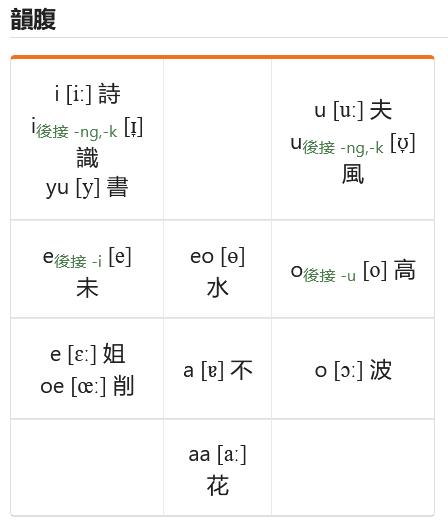
i, u, e, o 均爲一個符號對應兩個韻腹,具體所代表的韻腹取決於所搭配的韻尾。 即韻腹 e, o, i, u 在拼寫成 ei, ou, ing, ik, ung, uk 時,讀音與和其他韻尾搭配時稍有不同, 詳見表中IPA。
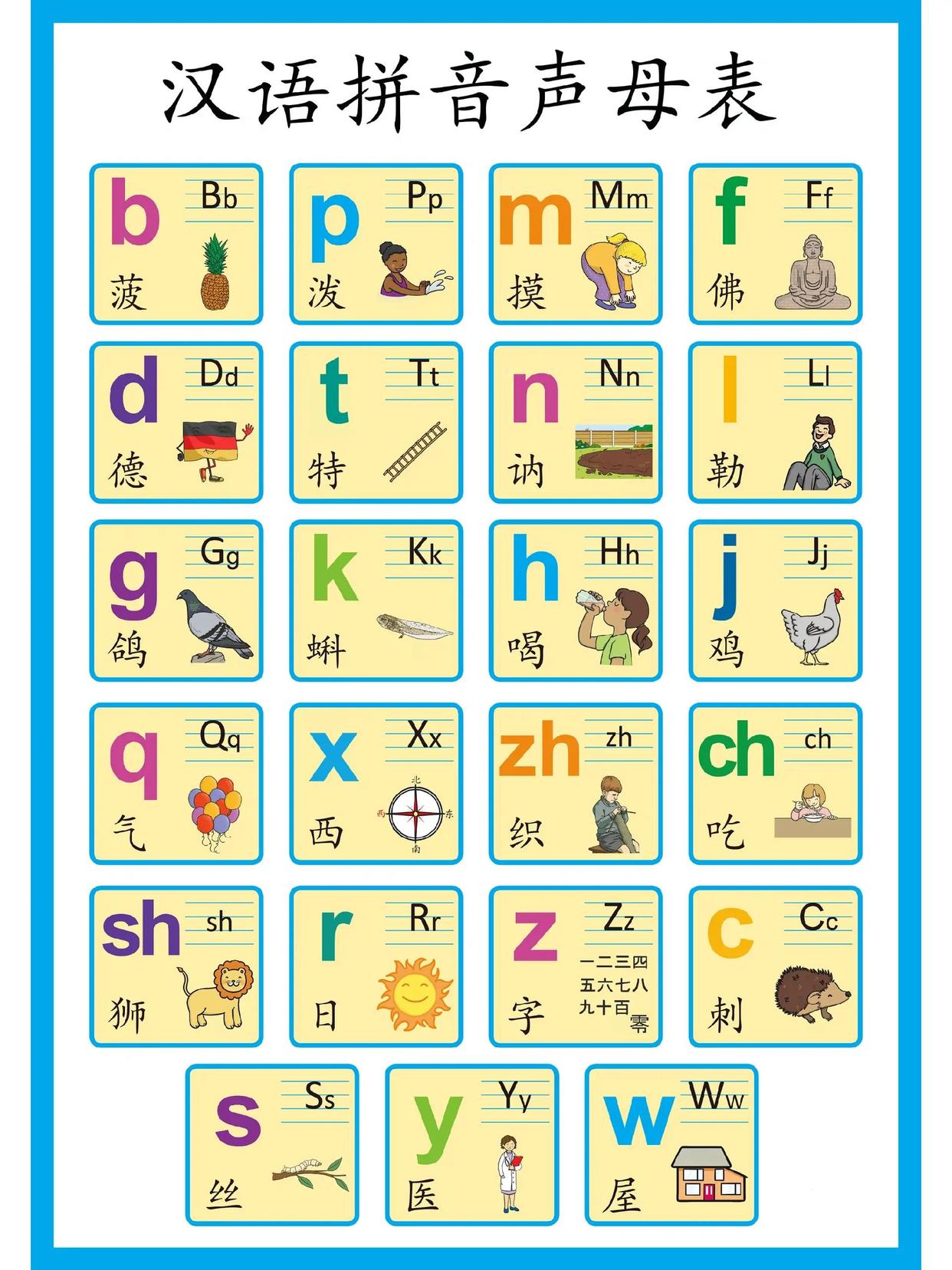
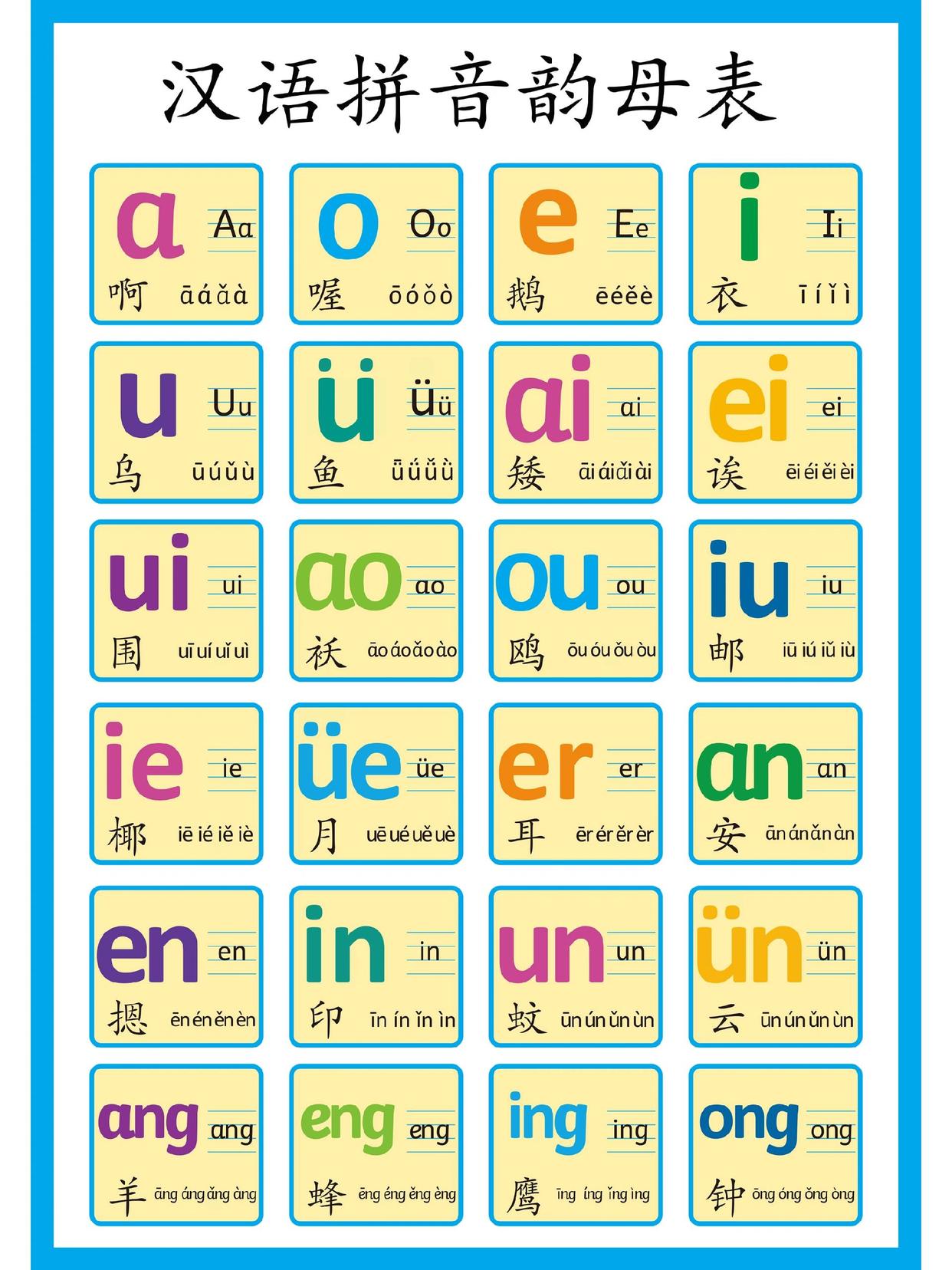
4. 汉语拼音字母表
Yongqiang Cheng: 汉语拼音字母表