Z-filter pulse program from Bruker for 3QMAS of half-integer spin quadrupole nuclei
Z-filter pulse program from Bruker for 3QMAS of half-integer spin quadrupole nuclei
Below NMR pulse program describes the z-filter approach for (1D and 2D) +3Q-MAS experiment applied to quadrupolar nuclei with half-integer spin.
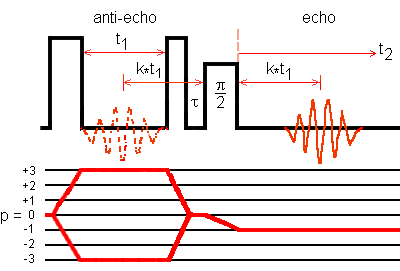
Fig. 1: Z-filter 3QMAS NMR pulse sequence and coherence transfer pathway.
The echo amplitude and the antiecho amplitude have the
same sign.
The
phase cyling for 3 strong pulses is discussed.
This NMR pulse program is for Bruker Avance spectrometers.
A pure absorption 2D spectrum is obtained with the shearing transformation.
; mp3qzqf

; 3Q MAS pulse program for half-integer spin nuclei
; 3-pulse experiment with zero quantum filter:
; excitation(±3Q) - conversion(0Q) - tau - 90° selective - ACQ(-1Q)
; 90° selective pulse should be determined first using Hahn-echo,
; determination by single pulse excitation is also possible
; Then optimise P2 and finally P1, 2 or more iterations for P1 and P2
; may be needed.
; For processing shearing transformation may be requested,
; use AU program xfshear

;ns :  12*n
;d1 :  recycle delay
;p1 :  excitation pulse at pl11
;p2 :  conversion pulse at pl11
;p3 :  90 degree selective pulse at pl21
;pl1 :  = 120 db
;pl11 : power level for excitation and conversion pulses
;pl21 : power level for 180 degree selective pulse, ca. pl11 + 30 db
;d4 :  z-filter delay
;d0  : = 1u or longer
;in0 : 1 rotor period for synchronised experiment
;td1 : number of t1-experiments
;FnMODE : States
;MC2 : States

  ze                  ; clear memory, new data replace old data,
                      ; switch AD converter to replace mode,
                      ; perform DS before next acquisition,
1 d1                  ; recycle delay,
  10u pl11:f1         ; 10 microsecond delay,
                      ; set high power in f1 channel,
  (p1 ph1):f1         ; high-power excitation pulse,
  d0                  ; delay between pulses, t1 increment,
  (p2 ph2):f1         ; high-power conversion pulse,
  d4 pl21:f1          ; set low power in f1 channel,
  (p3 ph3):f1         ; low-power 90° pulse,
  go=1 ph31           ; signal acquisition,
                      ; loop to 1, ns times for averaging,
  d1 mc #0 to 1 F1PH(ip1, id0)
                      ; delay for disk I/O, store signal,
                      ; increase FID number,
                      ; delete memory data,
                      ; do not perform dummy scans
                      ; with next acquisition,
                      ; increment p1 pulse phase by 360°/12 for States procedure,
                        ; loop to 1, 1 time for States procedure,
                      ; increment time d0 by in0,
                        ; loop to 1, td1/2 time for 2D experiment
  exit                ; end of the pulse program

ph1=(12) 0                        ; excitation pulse phase
ph2=(6)  0 0 1 1 2 2 3 3 4 4 5 5  ; conversion pulse phase
ph3=     0 2                      ; 90° selective pulse phase
ph0=     0
ph31=    0 2 2 0                  ; receiver phase
If the third pulse must be a strong RF pulse for better excitation of off-resonance nuclei, the phase cyclings of ph1, ph2, ph3, and ph31 should be the following for spin I = 3/2. However, there is no harm in applying these phase cyclings concerning 3-strong pulse sequence even when the third pulse is a weak RF pulse.
; ns: 24*n
; pl21 = pl11
ph1=(12) 0 2 4 6 8 10               ; excitation pulse phase
ph2=     0                          ; conversion pulse phase
ph3=(4)  0 0 0 0 0 0  1 1 1 1 1 1
         2 2 2 2 2 2  3 3 3 3 3 3   ; 90° pulse phase
ph0=     0
ph31=    0 2 0 2 0 2  1 3 1 3 1 3
         2 0 2 0 2 0  3 1 3 1 3 1   ; receiver phase
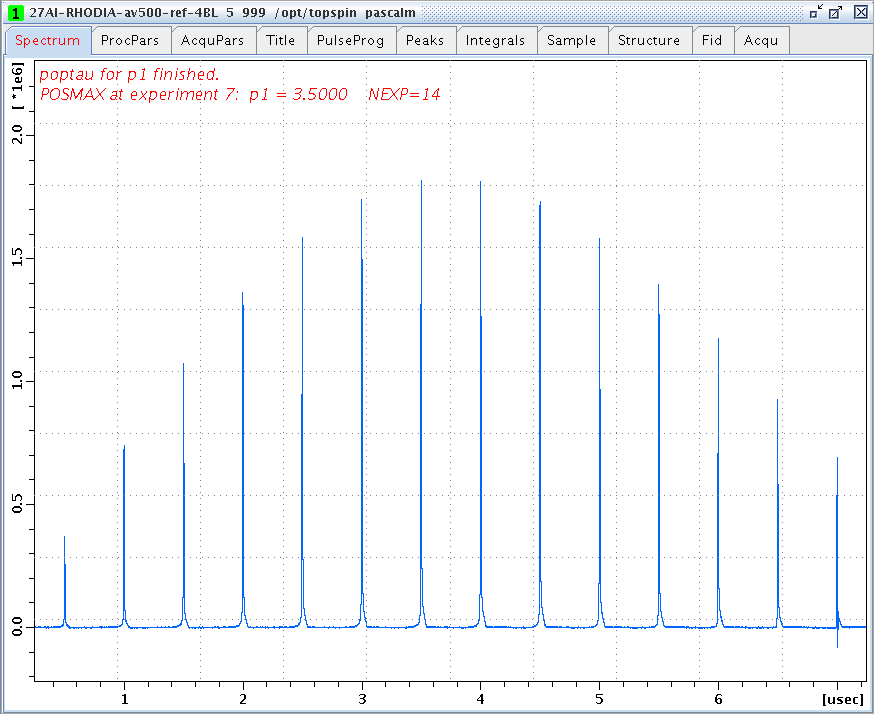
27Al spectra of reference solution versus the excitation pulse p1 duration (pl1 = 0.5 dB) in zg pulse program, acquired with a 4-mm diameter rotor, D1 = 1 sec recycle delay, and recorded with Bruker Avance III, 500 MHz WB US magnet.
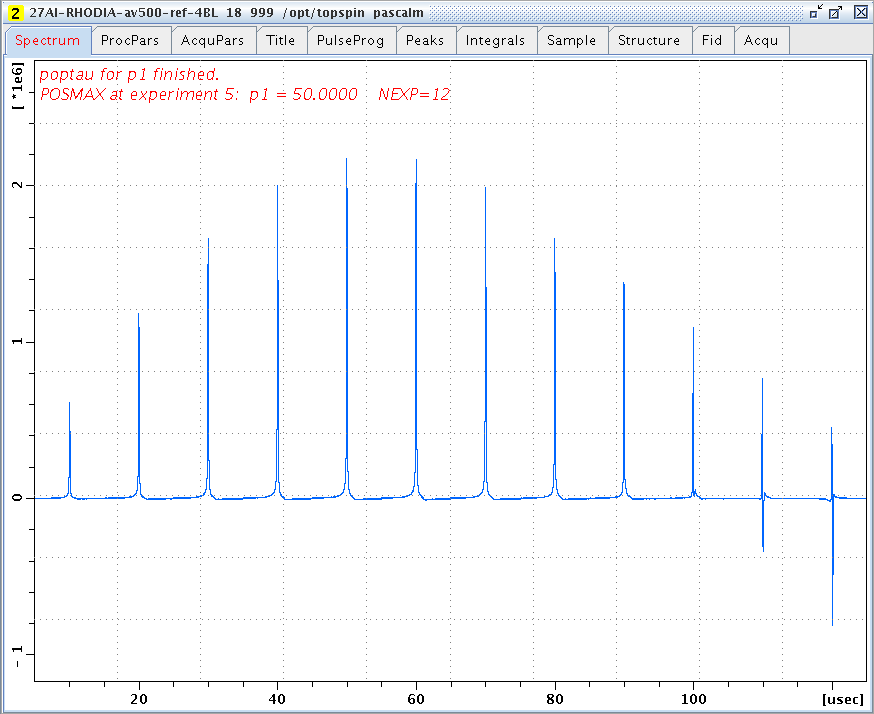
27Al spectra of reference solution versus the excitation pulse p1 duration (pl1 = 24 dB) in zg pulse program.
Pulseprogram parameters for zg:
| General | |
| PULPROG | zg |
| TD | 4604 |
| NS | 8 |
| DS | 0 |
| SWH [Hz] | 20000.00 |
| AQ [s] | 0.1151500 |
| RG | 128 |
| DW [µs] | 25.000 |
| DE [µs] | 6.50 |
| D1 [s] | 1.00000000 |
| TD0 | 1 |
| Channel f1 | |
| NUC1 | 27Al |
| P1 [µs] | 3.50 |
| PL1 [dB] | 0.50 |
| PL1W [W] | 234.39410400 |
| SFO1 [MHz] | 130.3270545 |
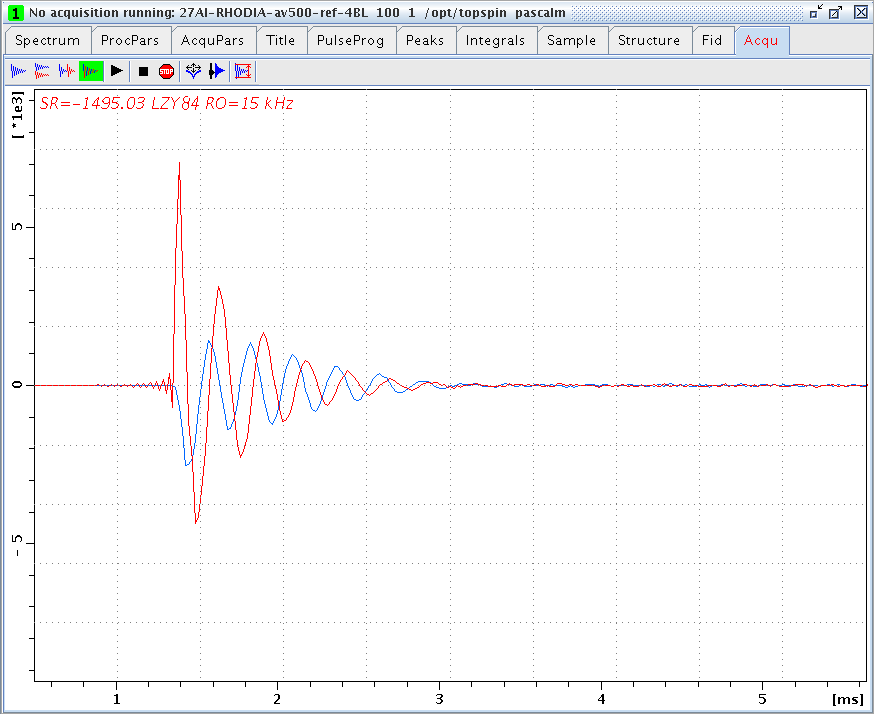
27Al MAS FID of LZY-84 zeolite, acquired with a 4-mm diameter rotor spinning at 15 kHz, D1 = 0.2 sec recycle delay, and recorded with Bruker Avance III, 500 MHz.
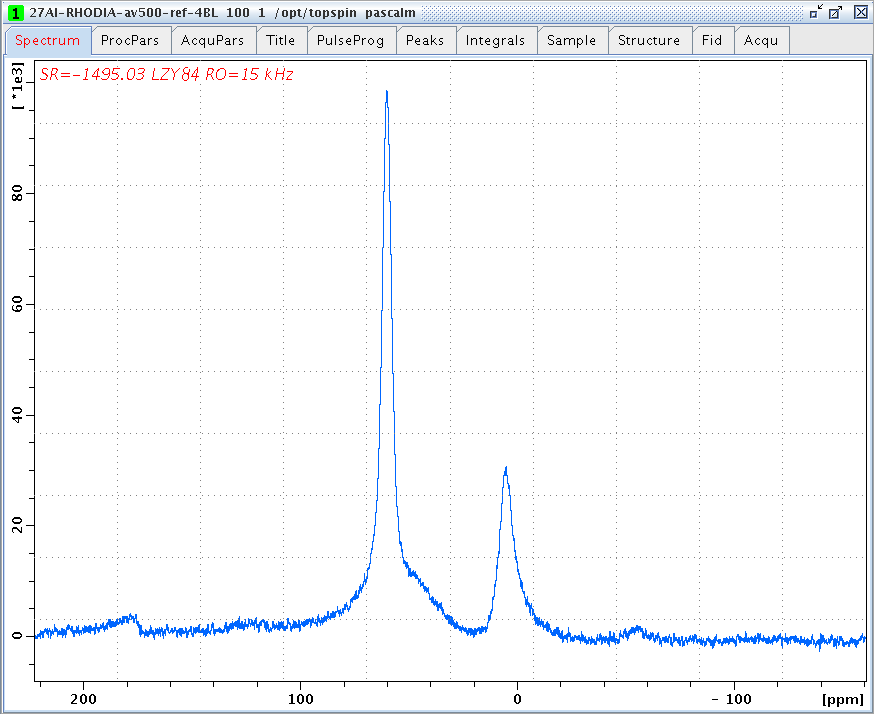
27Al MAS spectrum of LZY-84 zeolite, acquired with a 4-mm diameter rotor spinning at 15 kHz, D1 = 0.2 sec recycle delay, and recorded with Bruker Avance III, 500 MHz.
Pulseprogram parameters for zg:
| General | |
| PULPROG | zg |
| TD | 4604 |
| NS | 24 |
| DS | 0 |
| SWH [Hz] | 50000.00 |
| AQ [s] | 0.0460900 |
| RG | 64 |
| DW [µs] | 10.000 |
| DE [µs] | 6.50 |
| D1 [s] | 0.20000000 |
| TD0 | 1 |
| Channel f1 | |
| NUC1 | 27Al |
| P1 [µs] | 2.00 |
| PL1 [dB] | 0.50 |
| PL1W [W] | 234.39410400 |
| SFO1 [MHz] | 130.3311212 |
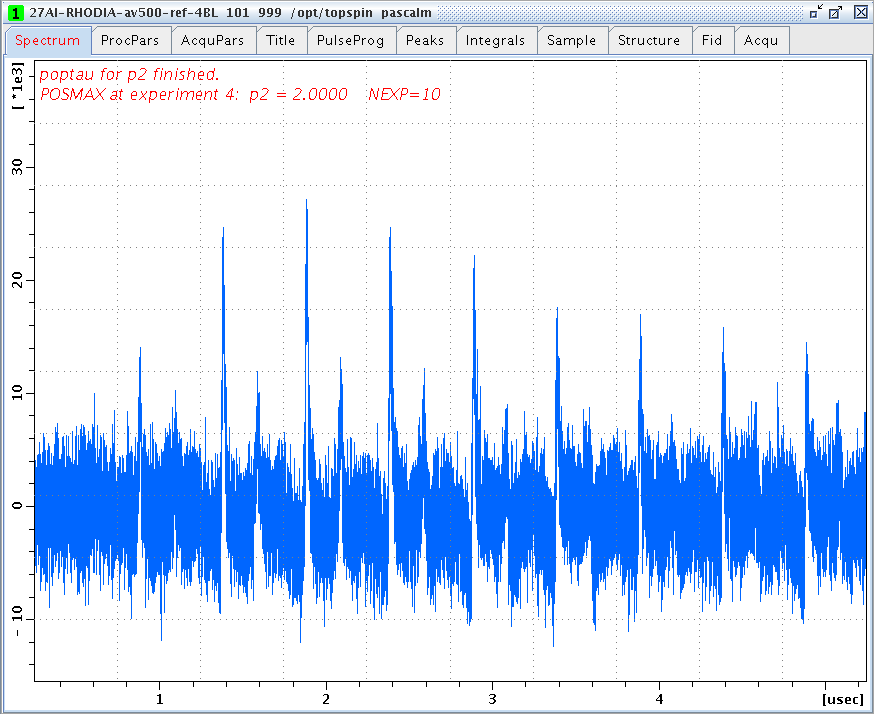
27Al MAS spectra of LZY-84 zeolite versus the excitation pulse p2 duration (pl11 = 0.5 dB) in mp3qzqf pulse program, acquired with a 4-mm diameter rotor spinning at 15 kHz, D1 = 0.2 sec recycle delay, and recorded with Bruker Avance III, 500 MHz.
Pulseprogram parameters for mp3qzqf:
| General | |
| PULPROG | mp3qzqf |
| TD | 4604 |
| NS | 120 |
| DS | 0 |
| SWH [Hz] | 50000.00 |
| AQ [s] | 0.0460900 |
| RG | 64 |
| DW [µs] | 10.000 |
| DE [µs] | 6.50 |
| CNST11 | 0.0000000 |
| D0 [s] | 0.00000300 |
| D1 [s] | 0.20000000 |
| D4 | 0.00002000 |
| Channel f1 | |
| NUC1 | 27Al |
| P1 [µs] | 5.00 |
| P2 [µs] | 2.00 |
| P3 [µs] | 16.00 |
| PL1 [dB] | 120 |
| PL1W [W] | 0.00000000 |
| PL11 [dB] | 0.50 |
| PL11W [W] | 234.39410400 |
| PL21 [dB] | 18.00 |
| PL21W [W] | 4.16818190 |
| SFO1 [MHz] | 130.3311212 |
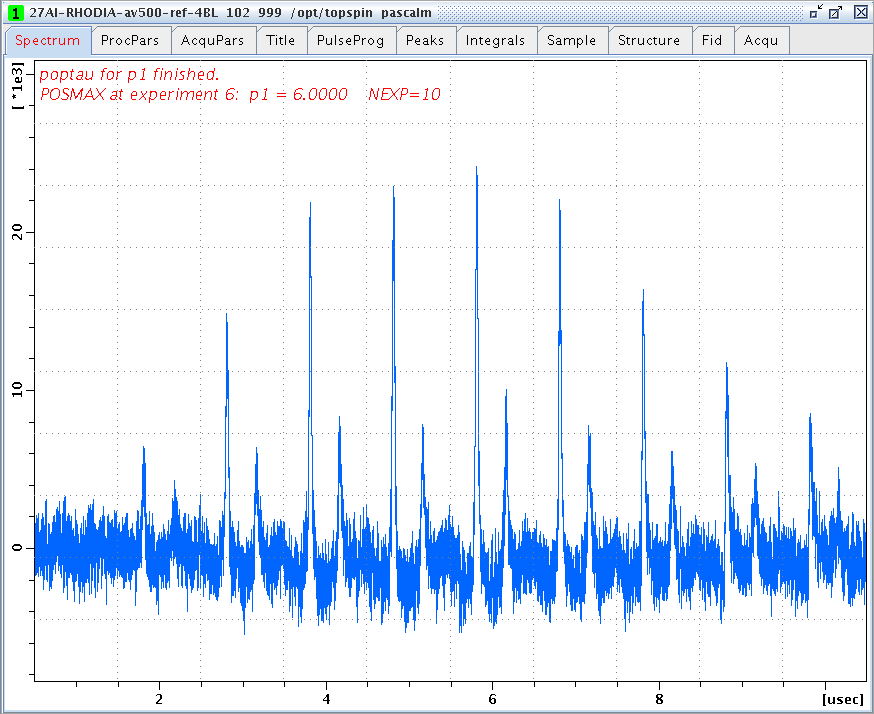
27Al MAS spectra of LZY-84 zeolite versus the excitation pulse p1 duration (pl11 = 0.5 dB) in mp3qzqf pulse program.
Pulseprogram parameters for mp3qzqf:
| General | |
| PULPROG | mp3qzqf |
| TD | 4604 |
| NS | 120 |
| DS | 0 |
| SWH [Hz] | 50000.00 |
| AQ [s] | 0.0460900 |
| RG | 64 |
| DW [µs] | 10.000 |
| DE [µs] | 6.50 |
| CNST11 | 0.0000000 |
| D0 [s] | 0.00000300 |
| D1 [s] | 0.20000000 |
| D4 | 0.00002000 |
| Channel f1 | |
| NUC1 | 27Al |
| P1 [µs] | 6.00 |
| P2 [µs] | 2.00 |
| P3 [µs] | 16.00 |
| PL1 [dB] | 120 |
| PL1W [W] | 0.00000000 |
| PL11 [dB] | 0.50 |
| PL11W [W] | 234.39410400 |
| PL21 [dB] | 18.00 |
| PL21W [W] | 4.16818190 |
| SFO1 [MHz] | 130.3311212 |
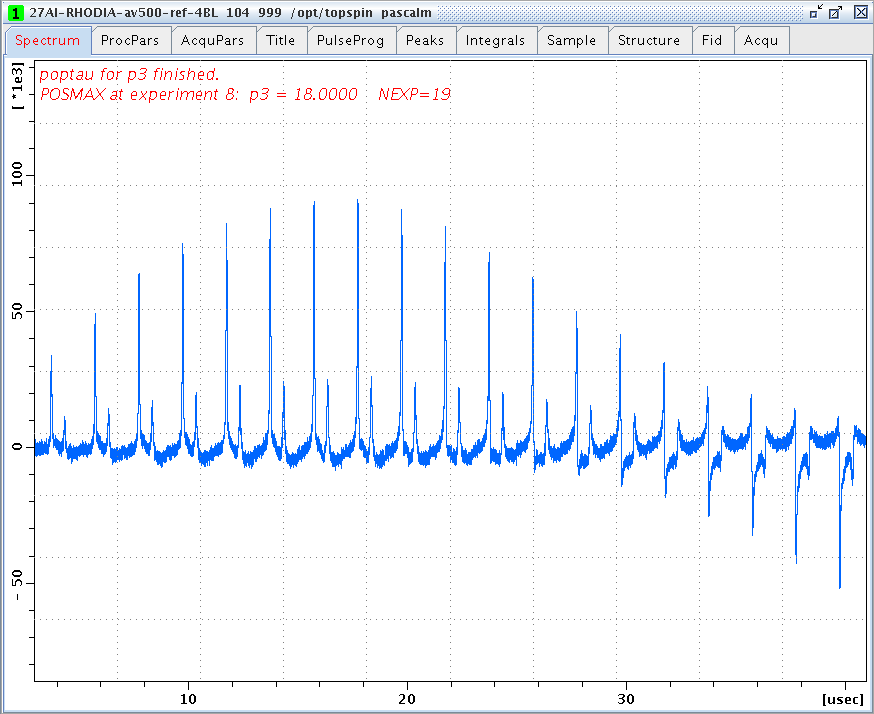
27Al MAS spectra of LZY-84 zeolite versus the excitation pulse p3 duration (pl21 = 24 dB) in mp3qzqf pulse program.
Pulseprogram parameters for mp3qzqf:
| General | |
| PULPROG | mp3qzqf |
| TD | 4604 |
| NS | 120 |
| DS | 0 |
| SWH [Hz] | 50000.00 |
| AQ [s] | 0.0460900 |
| RG | 64 |
| DW [µs] | 10.000 |
| DE [µs] | 6.50 |
| CNST11 | 0.0000000 |
| D0 [s] | 0.00000300 |
| D1 [s] | 0.20000000 |
| D4 | 0.00002000 |
| Channel f1 | |
| NUC1 | 27Al |
| P1 [µs] | 6.00 |
| P2 [µs] | 2.00 |
| P3 [µs] | 18.00 |
| PL1 [dB] | 120 |
| PL1W [W] | 0.00000000 |
| PL11 [dB] | 0.50 |
| PL11W [W] | 234.39410400 |
| PL21 [dB] | 24.00 |
| PL21W [W] | 1.04700005 |
| SFO1 [MHz] | 130.3311212 |
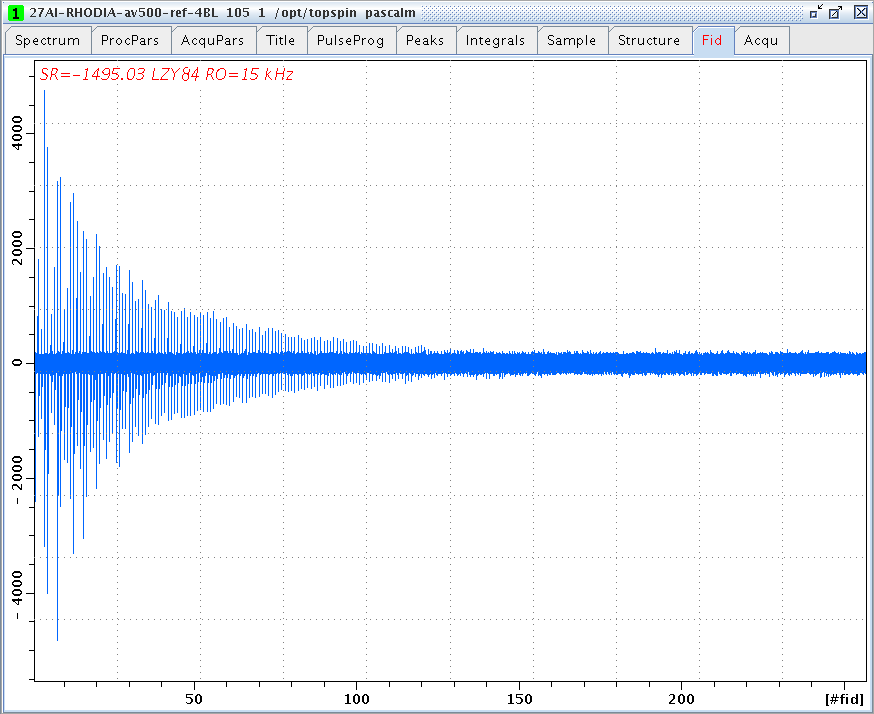
27Al 3QMAS series of FID of LZY-84 zeolite acquired with a 4-mm diameter rotor spinning at 15 kHz, D1 = 0.2 sec recycle delay, and recorded with Bruker Avance III, 500 MHz.
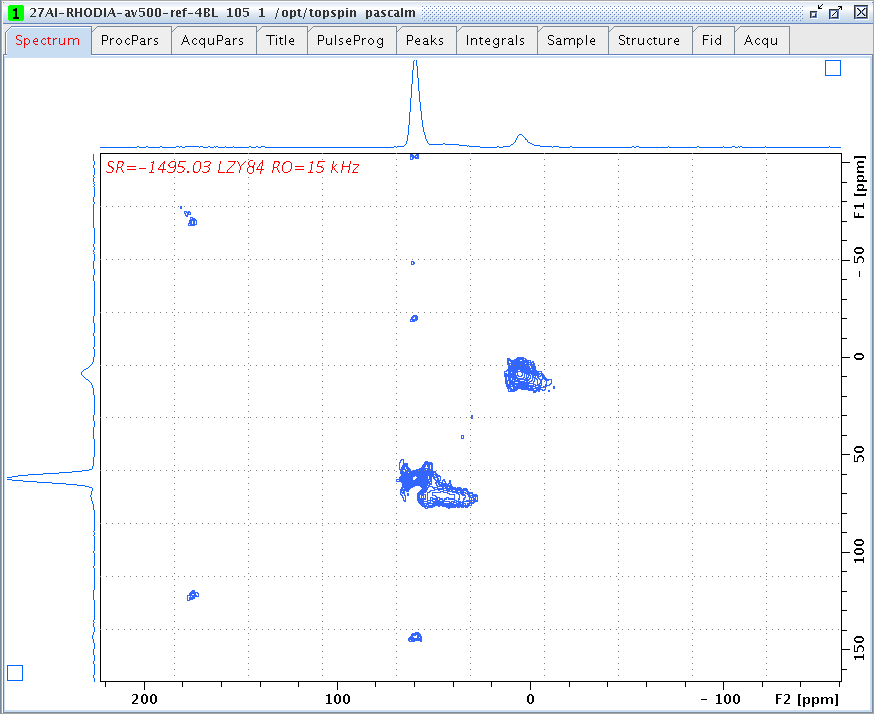
Xfsheared 27Al 3QMAS spectrum of LZY-84 zeolite acquired with a 4-mm diameter rotor spinning at 15 kHz, D1 = 0.2 sec recycle delay, and recorded with Bruker Avance III, 500 MHz.
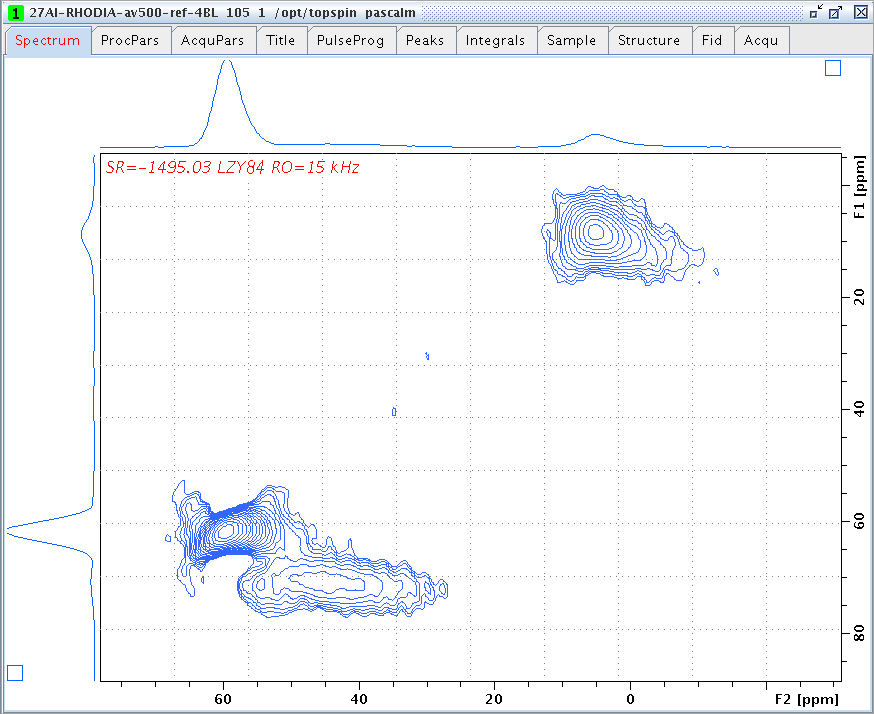
Zoomed 27Al 3QMAS spectrum of LZY-84 zeolite.
Pulseprogram parameters for mp3qzqf:
| General | |
| PULPROG | mp3qzqf |
| TD | 4604 |
| NS | 120 |
| DS | 0 |
| SWH [Hz] | 50000.00 |
| AQ [s] | 0.0460900 |
| RG | 64 |
| DW [µs] | 10.000 |
| DE [µs] | 6.50 |
| CNST11 | 0.0000000 |
| D0 [s] | 0.00000300 |
| D1 [s] | 0.20000000 |
| D4 | 0.00002000 |
| IN0 [s] | 0.00002000 |
| ST1CNT | 128 |
| Channel f1 | |
| NUC1 | 27Al |
| P1 [µs] | 6.00 |
| P2 [µs] | 2.00 |
| P3 [µs] | 18.00 |
| PL1 [dB] | 120 |
| PL1W [W] | 0.00000000 |
| PL11 [dB] | 0.50 |
| PL11W [W] | 234.39410400 |
| PL21 [dB] | 24.00 |
| PL21W [W] | 1.04700005 |
| SFO1 [MHz] | 130.3311212 |
Acquisition parameters:
| F2 | F1 | |
| Experiment | ||
| PULPROG | mp3qzqf | |
| AQ_mod | DQD | |
| FnMODE | States | |
| TD | 4608 | 256 |
| NS | 128 | |
| DS | 0 | |
| TD0 | 1 | |
| Width | ||
| SW [ppm] | 383.6382 | 383.6382 |
| SWH [Hz] | 50000.000 | 50000.000 |
| IN_F [µs] | 20.00 | |
| AQ [s] | 0.0460900 | 0.0025600 |
| Nucleus1 | ||
| NUC1 | 27Al | |
| O1 [Hz] | 2529.25 | 2529.25 |
| O1P [ppm] | 19.407 | 19.407 |
| SFO1 [MHz] | 130.3311212 | 130.3311212 |
| BF1 [MHz] | 130.3285920 | 130.3285920 |
Processing parameters:
| F2 | F1 | |
| Reference | ||
| SI | 2048 | 512 |
| SF [MHz] | 130.3270970 | 184.6300540 |
| OFFSET [ppm] | 222.70329 | 166.28419 |
| SR [Hz] | -1495.03 | -2117.96 |
| Window Function | ||
| WDW | EM | QSINE |
| LB [Hz] | 20.00 | 30.00 |
| SSB | 0 | 3 |
| Nucleus1 | ||
| Fourier transform | ||
| TDeff | 512 | 160 |